



As commercial AV projects become more experience-driven and interconnected, strategic partnerships have emerged as one of the industry’s most effective tools for reducing complexity. Validated integrations between manufacturers help integrators deploy systems more efficiently, expand project scope beyond traditional AV, protect profitability, and deliver seamless customer experiences.
The growing emphasis on partnerships throughout InfoComm 2026 and CEDIA Expo 2026 underscored how central collaboration has become to modern system design. As customers demand increasingly connected environments, manufacturers are finding that no single technology category can deliver the complete experience on its own.
For years, one of the AV industry’s greatest strengths has been its ability to bring together technologies from different manufacturers to create cohesive user experiences. While today’s solutions are more comprehensive than ever, with many manufacturers offering increasingly complete platforms, the value of partnerships has not diminished. If anything, it has become more important.
The role of the commercial integrator continues to evolve, as well, requiring more than a well-designed, interconnected system of products. These professionals are now being asked to create seamless experiences that blend audio, video, lighting, control, furnishings, environmental systems, and more into unified environments. Delivering those experiences requires collaboration, not just between technologies, but between the companies that develop them.
What Did InfoComm 2026 and CEDIA Expo 2026 Reveal About the Future of AV Partnerships?
Key Takeaway: Strategic partnerships are no longer just about interoperability—they are becoming essential to delivering the connected experiences customers expect.
If there was one theme that emerged repeatedly across the InfoComm show floor this year, it was the growing emphasis on partnerships. From control and automation providers to lighting, shading, collaboration, and workplace technology companies, manufacturers increasingly showcased not only their own innovations but also how those innovations fit into broader technology ecosystems.
The message was remarkably consistent: customers want connected experiences, and those experiences depend on technologies that are intentionally designed to work together.
That shift reflects a larger trend within commercial AV. As customers prioritize user experience and operational simplicity, manufacturers are working more closely together to create validated integrations that simplify deployment while expanding what systems can accomplish. For integrators, the future of commercial AV is not defined by standalone products, but rather ecosystems of technologies that have been purpose-built to work together.
How Do Strategic Partnerships Reduce Integration Risk?
Key Takeaway: Partnerships reduce integration risk by validating interoperability before products ever reach the jobsite.
Commercial projects continue to grow more sophisticated, but customers increasingly expect them to be easier to use. Whether it’s a restaurant, fitness center, corporate office, hospitality venue, or retail environment, business owners want technology that feels intuitive, familiar, and reliable. They want systems that work without requiring extensive training or technical expertise. This is where partnerships create value.
When manufacturers collaborate to develop tested integrations, the burden on the integrator decreases dramatically. Rather than spending time determining whether products will communicate effectively, or troubleshooting unexpected interactions in the field, integrators can deploy solutions with confidence, knowing compatibility has already been validated. The result is a faster design process, smoother installation, and a more predictable customer experience.
For integrators, predictability matters. Every unexpected issue translates into additional labor, delayed timelines, and reduced profitability. Pre-engineered partnerships help eliminate those surprises.
How Do Partnerships Expand What AV Systems Can Do?
Key Takeaway: The most valuable partnerships don’t add complexity—they expand functionality while simplifying management.
The industry has seen a growing trend toward end-to-end solutions. Many manufacturers now offer platforms capable of addressing significant portions of a project’s requirements within a single ecosystem. Yet even when a manufacturer provides a comprehensive solution, partnerships remain valuable because they extend what that solution can accomplish.
Think of partnerships as a force multiplier. A complete audio platform may already satisfy an integrator’s core requirements. However, when that platform integrates seamlessly with control systems, lighting controls, motorized shades, room scheduling systems, and custom interfaces, it becomes part of a larger ecosystem that delivers a more compelling experience.
Additionally, when done correctly, partnerships reduce the number of touchpoints an integrator must manage while simultaneously expanding the capabilities available to the customer.
Why Do Partnerships Improve Project Profitability?
Key Takeaway: Repeatable integrations reduce labor costs, improve project margins, and create scalable deployment models.
In commercial environments, repeatability is often just as important as innovation. Consider a franchise restaurant chain, a regional fitness brand, or a multi-location corporate deployment. Success depends on creating listening experiences that move smoothly and consistently across multiple spaces within a facility. Partnerships play a critical role in making this possible.
When technologies have already been tested and optimized to work together, integrators can establish repeatable designs that become templates for future deployments. Rather than reinventing the wheel for every project, they can leverage proven combinations of products and workflows. That consistency benefits everyone involved. Integrators gain efficiency. End users receive predictable performance. Facility managers can standardize training and support procedures. Business owners gain confidence that every location will deliver a consistent experience.
In many cases, the true value of a partnership isn’t revealed during the initial installation. It’s revealed when the second, tenth, or hundredth deployment proceeds smoothly because the integration work has already been done.
Why Is User Experience Driving More AV Partnerships?
Key Takeaway: User experience, not individual products, is becoming the primary driver behind strategic AV partnerships, enabling integrators to deliver spaces that are intuitive, engaging and easier to manage.
Historically, many commercial AV projects began with a discussion about infrastructure and control. User experience often became a secondary consideration. Today, that mindset is changing. Businesses are increasingly asking how a space should feel, how employees should interact with technology, and how customers should engage with the environment. Audio, in particular, has become a much more intentional component of those conversations.
Rather than being treated as an afterthought, audio is increasingly viewed as an essential contributor to workplace culture, customer engagement, and brand identity. That shift creates new opportunities for partnerships. Control platforms can simplify operation. Lighting systems can support atmosphere and mood. Environmental controls can streamline workflows. Design-focused solutions can help technology blend more naturally into a space. Together, these elements create experiences that no single technology category could deliver independently. In this model, the integrator becomes the orchestrator of the experience, leveraging partnerships as tools to achieve the desired outcome.
How Are Partnerships Bridging Technology and Design?
Key Takeaway: As commercial spaces become more experience-driven, partnerships increasingly extend beyond technology into design and environmental integration.
Partnerships in today’s AV industry extend beyond interoperability. Increasingly, they are helping integrators address a broader challenge: creating spaces where technology supports the environment without becoming the focal point.
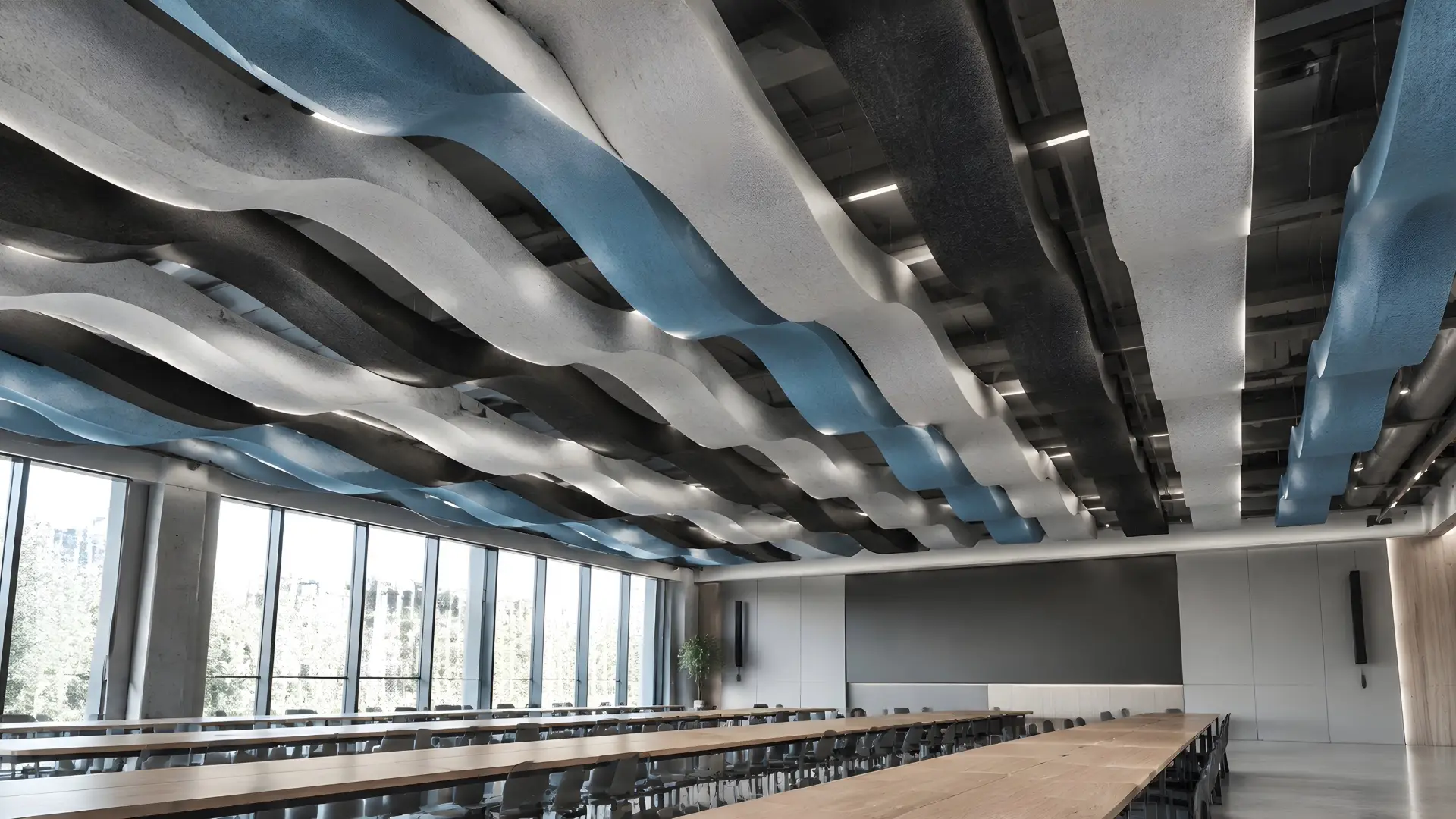
In commercial settings, from executive boardrooms and hospitality venues to retail spaces and customer-facing environments, the visual experience increasingly matters as much as the technical one. Clients want systems that deliver exceptional performance while aligning with the architectural vision of the space. That’s where cross-industry collaboration becomes valuable. Partnerships between audio manufacturers, furniture makers, mounting solution providers, and other design-focused technology companies help integrators deliver experiences that are both functional and visually cohesive. Rather than treating technology as a collection of separate devices, these partnerships enable a more holistic approach to system design, one that considers acoustics, aesthetics, usability, and the overall character of the space from the outset.
How Do Partnerships Improve Long-Term System Reliability?
Key Takeaway: Strong partnerships help future-proof systems by ensuring integrations remain reliable as technologies evolve.
One of the less visible but highly valuable benefits of manufacturer partnerships is what happens after installation. When partner companies collaborate closely, firmware updates, feature enhancements, and platform improvements can often be coordinated more effectively. Compatibility issues are identified earlier. Development teams share information. Integrators gain confidence that supported integrations will continue functioning as expected over time.
For customers, this creates a more stable experience. For integrators, it reduces service calls and minimizes the risks associated with future upgrades.
Better Outcomes for Everyone
The growing prominence of partnerships reinforces an important reality for the commercial AV industry: collaboration is no longer a nice-to-have. It has become a fundamental component of successful system design. Moreover, partnerships are not about adding complexity; they are about removing it. When products are designed to work together from the outset, integrators spend less time troubleshooting compatibility issues and more time focusing on what matters most: designing experiences that meet their customers’ goals.
As commercial AV continues to evolve toward experience-driven design, the importance of collaboration will only grow. Even as manufacturers develop increasingly comprehensive solutions, strategic partnerships provide an additional layer of capability, flexibility, and simplicity. They allow integrators to expand what systems can do without introducing unnecessary complexity into the deployment process.
For integrators, that means fewer surprises, more predictable installations, reduced service calls, and greater confidence in the systems they deliver. Proven integrations also help protect profitability by reducing onsite troubleshooting, simplifying commissioning, and creating repeatable deployment models that can be scaled across multiple projects and locations.
Commercial customers benefit as well. Rather than managing multiple vendors, disparate systems, and competing support channels, they gain access to a more cohesive solution delivered through a single integration partner. Bills of materials become easier to manage, training requirements are reduced, and ongoing system administration becomes more straightforward.
The overarching message to the broader commercial AV market is clear: strategic partnerships are no longer optional. They have become a critical mechanism for reducing complexity, expanding system capabilities, improving interoperability, and creating better outcomes for both integrators and end users.
