


Sonos’ newest products work best when you stop treating them as separate products. Beam Ultra is a capable compact soundbar, Ace Ultra is a comfortable and flexible pair of headphones, but Sonos 27, which has ramifications across the company’s entire portfolio, is the thing that really stands out. After living with them together, the biggest win was not raw power. It was how little I had to think about moving sound around the house.
After reading about (and covering) the Sonos 27 launch event while I was at CEDIA Expo, and then getting to see the new Beam Ultra soundbar and Ace Ultra headphones in person there, I was jonesing to get my hands on the company’s new gear and try it for myself.
The promise of Sonos as a platform has always been simplicity combined with sophisticated sound. This new wave of product, per the accompanying press release, seemed very committed to that mission. And, truthfully, Sonos needed to be, considering how its previous attempt at launching headphones and an app update went.
The messaging was right. The launch event seemed well-executed. But how would all of this perform in the wild? (My house, with two young boys, most certainly qualifies as the wild.) I needed to find out.
Broken down, this is really a review of three things: Beam Ultra, Ace Ultra, and Sonos 27, the new audio operating system tying everything together. That’s a lot, but the point is the way those pieces interact. Beam Ultra and Ace Ultra are the hardware. Sonos 27 is the connective tissue.
Sonos 27
Diving right into the meat of this, the Sonos 27 platform is really what this review is all about.
Any leftover bad taste someone might have had about that app update should be washed clean after experiencing this latest software push. Sonos 27 is described by the company as “the software that turns every piece into one system.” From the speakers, to your streaming platform of choice, to the fine tuning of the system for each room, to any additional pieces that get added later, Sonos 27 is the hub and the heartbeat.
What’s slick about it, though, is that much of this technology has been sitting within the Sonos ecosystem the whole time. Now the training wheels feel like they’ve come off. Or, in NASCAR terms, we’re at Daytona and the restrictor plate has been removed.
Want to pair your Beam Ultra with a set of compatible Sonos speakers? Go ahead and add them as rear channels to create a powerful surround system. Want to add a Sub Mini down the line? When you’re ready, just plug it in, the system will find it and place it in the room, and you’re good to go. Feel like taking one of those surrounds outside for an evening in the backyard? Pick it up and you’re good to go.
The ability to expand the system was stupidly simple in the best way. For those familiar with the Sonos ecosystem, you already have your rooms identified throughout the home. When you add a product, it is as easy as tapping the “Add Speaker or Component” button in the app settings and choosing which room or zone it will live in.
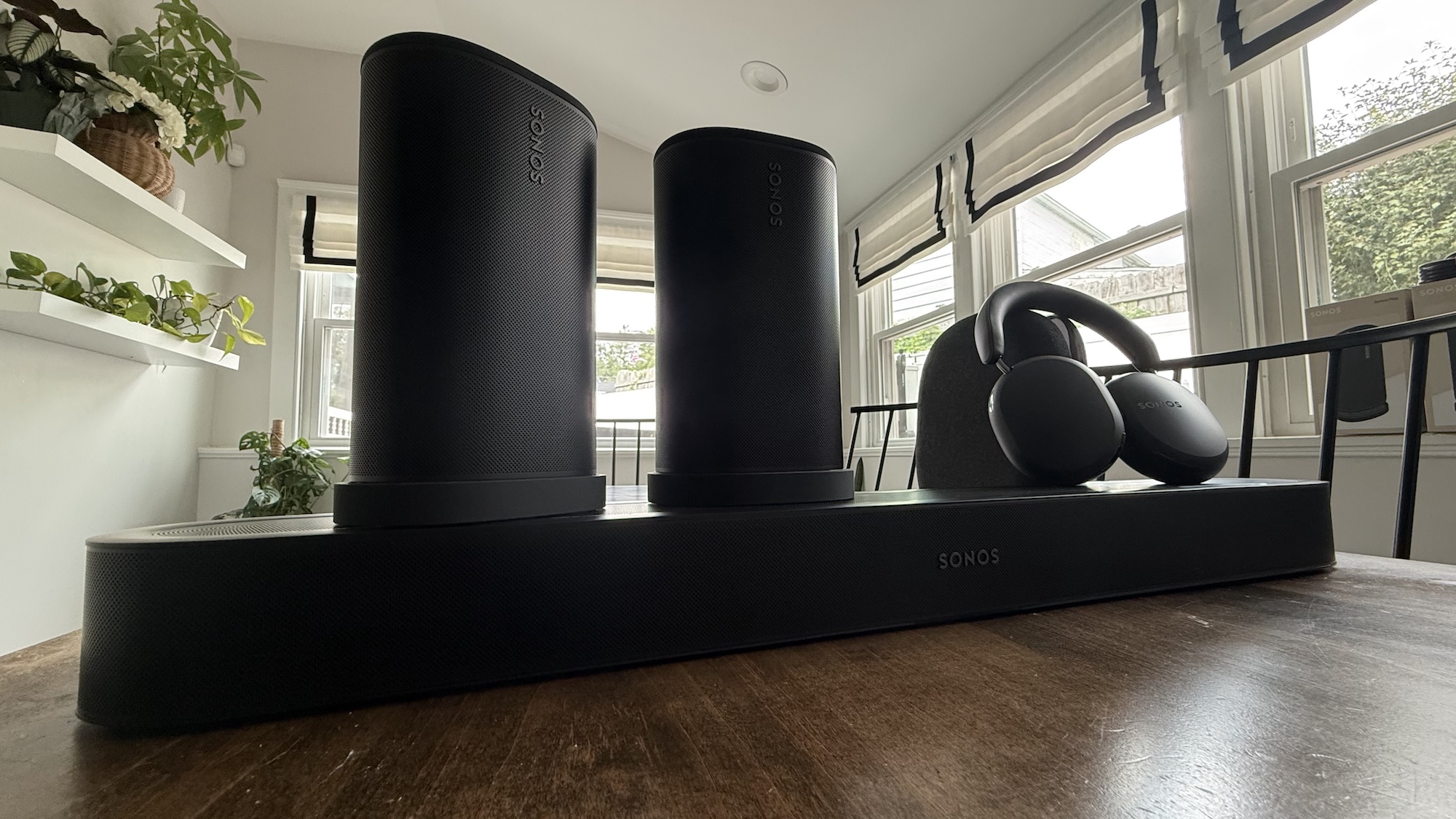
For the purposes of this review, I was able to bring the Beam Ultra and two compatible Sonos speakers together in our media room to create a surround sound experience. It is no exaggeration to say that I spent more time opening the boxes for each product than I did setting the system up. It took all of three minutes to plug each speaker in, connect them to the app, and link them all in the Media Room to create the mini home theater vibe I was looking for.

Using the Sonos app and the microphone on your smartphone, you can then fine tune the system to the exact space you intend to use it in. The in-app process involves the speakers sending a sonic wave throughout the room while you walk around with your smartphone’s microphone pointed away from you, creating a sort of sonic fingerprint for the room. The system then adjusts for things like surface texture, layout, room depth, and other variables to optimize itself. It’s not quite as intricate as something like Dirac’s room correction, but similar in concept.
When we are not using the full surround sound setup, the rear speakers can go in separate rooms for the kids, and the Beam Ultra still provides room-filling sound on its own.
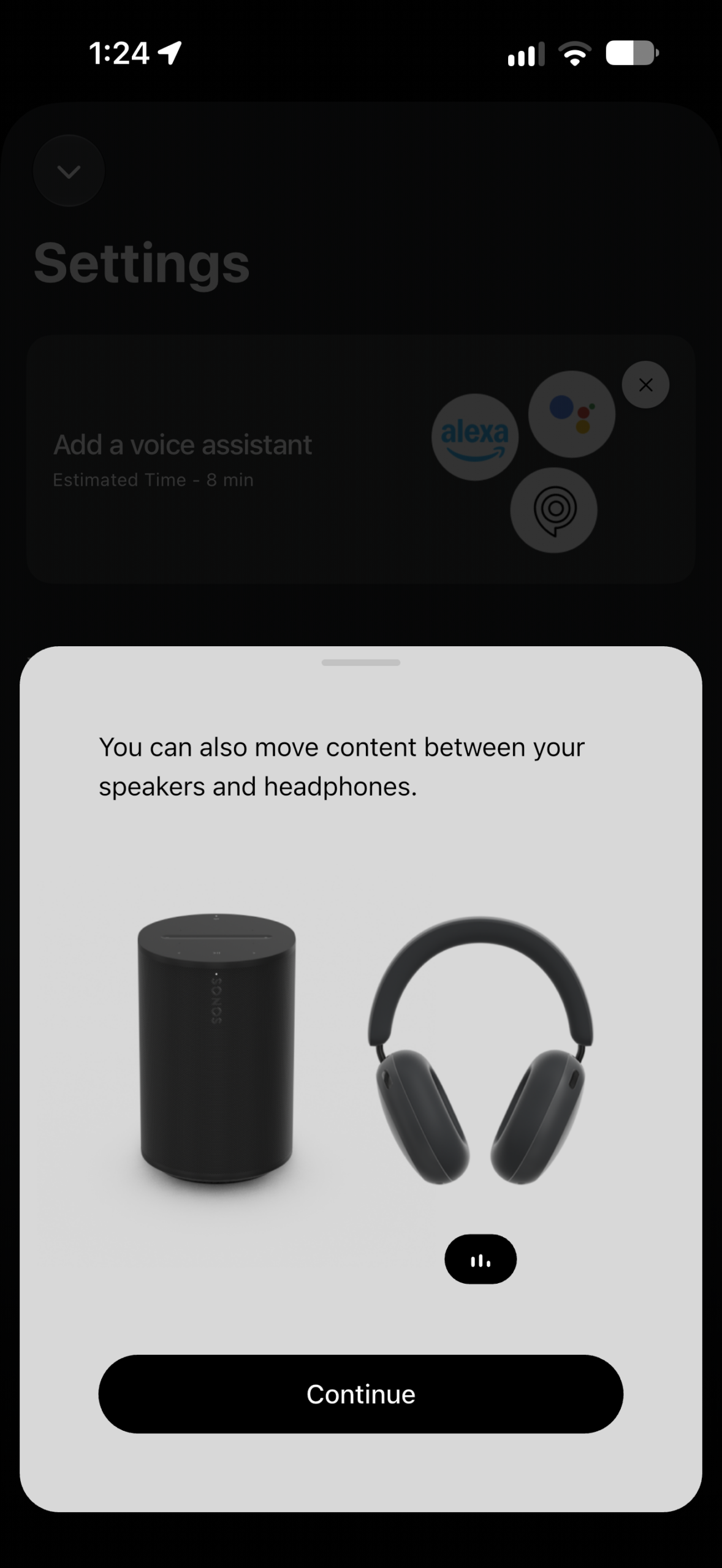
And then we get to bring the Ace Ultra headphones into the discussion. While at CEDIA Expo, the feature that got me most excited about Sonos 27 was the ability to quickly throw audio from the TV to the headphones at the touch of a button. In our house, with kids who are in bed generally early and a TV near the base of the steps that lead right to their rooms, keeping quiet at night is the difference between them staying asleep or sneaking downstairs a half dozen times.
With a simple tap of the content button on the Ace Ultras, you can swap the audio between the headphones and the full speaker system. The process is painless. Latency was low enough that I rarely noticed it. And, most important, the evenings have been stress free.
Sonos 27 is really about adding versatility to a system that was already capable of creating an enjoyable whole-home audio experience. It makes the system feel less like a collection of speakers and more like one audio environment you can rearrange as life in the house changes.
Beam Ultra
I’m on record saying that I don’t find it fair to rate audio products in a vacuum because everyone’s preferences are different. Rather, I like to look at this category from the perspective of whether a product can help me achieve my preferred audio profile. From there, I care how it performs against other products in its category.
I’m a heavy bass sort of listener. I will not apologize for the fact that my music taste has not matured past high school. Give me Linkin Park’s heavy riffs and deep screams at levels I can feel deep in the bone marrow. Sonos provides a solid amount of control over the ability to fine tune the EQ settings to your liking, which is all you can ask for in a system like this.
On the Beam Ultra itself, you’re looking at a really strong, relatively approachable soundbar that is packed with features. On the performance side, it is a 7.1.2 Dolby Atmos soundbar with AI Speech Enhancement for voice clarity, Wi-Fi and Bluetooth streaming, eARC compatibility, Sonos Voice Control, and more. Available in both black and white, the Beam Ultra is low profile, measuring about 2.5 inches in height and just under 30 inches wide. You can wall mount it if you’d like, but it was perfectly out of the way just resting on the under-TV counter for me.
The soundbar on its own was impressive enough. Pairing it with the rear speakers as surrounds added another dimension to the overall experience. I can just imagine the AV purists’ heads bursting at the thought of me saying this, but in terms of simplicity and performance, I’d be more than happy to have this as an everyday theater in our home in my modest Cape Cod-style home. Y’all who hate on that are probably the same individuals who hate baseball’s ABS challenge system (presented by T-Mobile) because it “removes the human element” from the game. Get over it. Welcome to modern times. I’d rather those ball-strike calls be correct, and I prefer an audio setup that’s simple, intuitive, and more than capable.
The real aha moment for me with the system wasn’t even a particular movie scene. It was an MTV Unplugged streaming session featuring Bastille on Apple Music. With just the soundbar and two rears, I legitimately could place the brass ensemble behind me, Dan’s vocals a few feet in front of me, his supporting vocals a few feet to his right, and the drums stage left. Eyes closed, it felt like I was sitting on stage while they performed around me. That type of spatial audio experience should not be possible with just a couple of Sonos speakers, right?
Tested again with Linkin Park’s new Unshatter live album from a recent Sao Paulo show, the experience was the same. The stage was very clearly in front of me while the rears helped fill in the crowd noise, putting me squarely in the middle of what was assuredly the pit, surrounded by a sea of 48,000 screaming fans.
Ace Ultra
I am firmly in the spoiled rotten camp of over-ear headphone wearers. I’ve used Apple’s AirPods Max for the better part of the past five years as my daily drivers, be it for music listening, virtual meetings, podcasts, you name it.
The sound quality is exceptional, as expected. But it always boils down to simplicity for me. You put the AirPods Max on, they connect, and they just work. That’s what you want out of a product that is as personal as a pair of headphones, especially when it also needs to be comfortable enough to wear for long stretches.
Sonos checks just about all the boxes with Ace Ultra. From a comfort perspective, these are up there with some of the most comfortable over-ears I’ve ever worn. The swappable ear cushions are made of a leather-like material, as is the head cushion. That top cushion is a marked improvement over the two hard pieces of plastic on the AirPods Max that tend to leave grooves on my scalp. So, suffice it to say, Sonos has Apple beat on comfort.
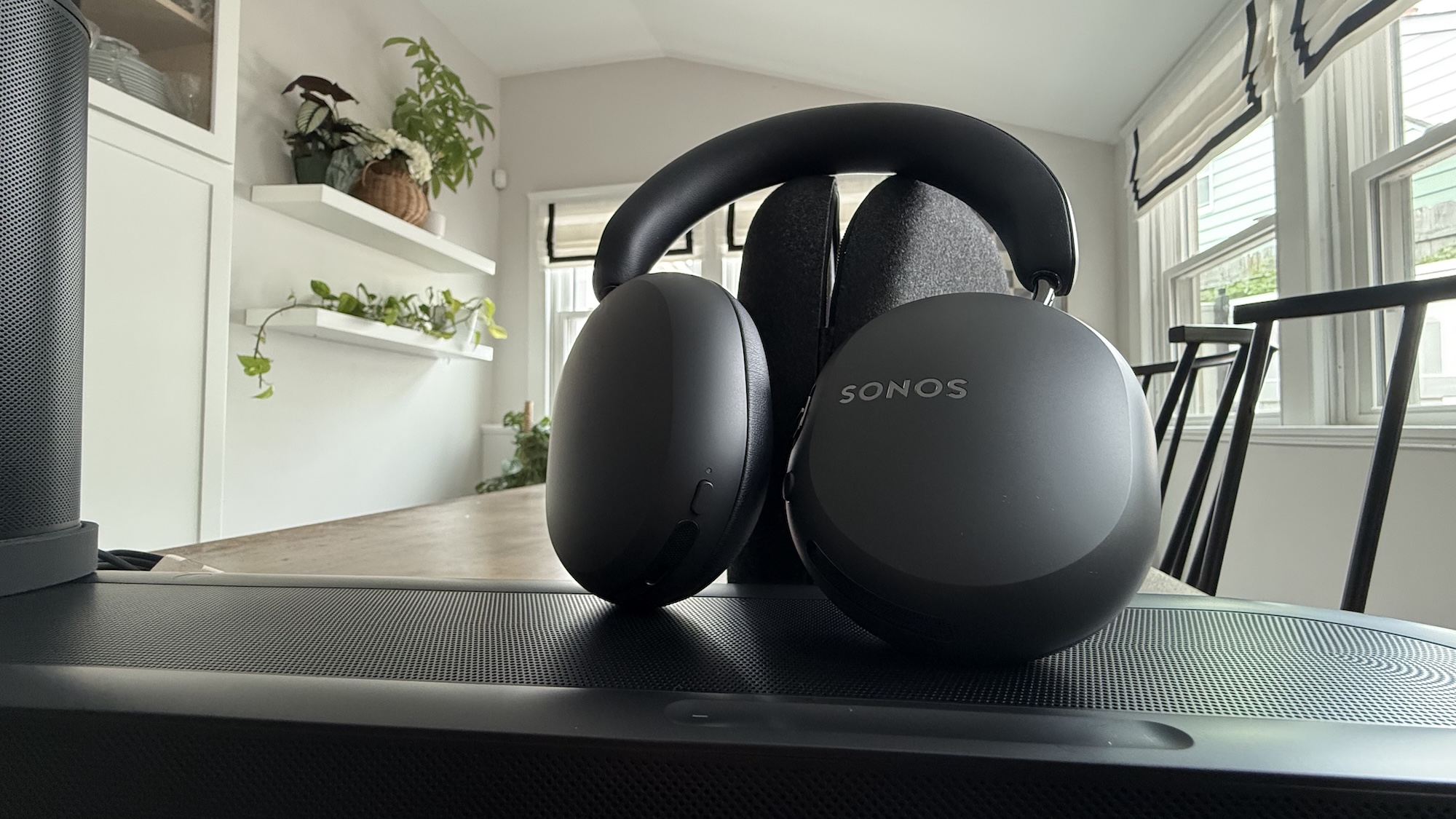
Transparency mode is not something that, on its own, should be called out anymore. It is fairly standard in headphones today. But the sound quality was of note to me. Often, this mic-enabled feature has a robotic texture to it. The Ace Ultras sound as close to natural as I’ve experienced in a transparency mode, which matters when the whole point of the feature is sound and voice clarity.
On the sound settings, Sonos gives extra control over the EQ performance in the Ace Ultras, providing eight bands you can adjust from low-end bass up through the mids and into high-end treble. The potential combinations number in the thousands, meaning you can build a truly unique sound profile for yourself. The headphones are also head-tracking enabled, meaning you can experience spatial audio, something I’m not entirely a fan of using with over-ears. Kind of defeats the purpose, if you ask me.
Another key feature here is that the battery is replaceable via a $25 replacement kit. That calls for a major tip of the cap to Sonos. It gives customers the comfort and security of knowing that if, or when, the battery starts to fail, they can swap in a new one and effectively get more life out of the same set of cans, avoiding a situation where they’d need to drop another $449 on new headphones.
And from an audio quality perspective, the Ace Ultras certainly perform well next to others in the same cost range. At that stated cost, you’re spending less than what Apple asks for its high-end over-ears, but you get a comfier wear, a comparable audio experience, and far more control over your actual listening profile.
Not to mention the added features that come with the aforementioned Sonos 27 platform.
The only drawback of these, and just about any other over-ear headphone not made by Apple is the fact that there are multiple buttons, switches, and functions that need to be learned. At times it can feel like you’re trying to enter Morse Code on your headphones just to answer an incoming call only to accidentally crank the audio to max. To be fair, I have the added difficulty of regularly needing to relearn different headphone functions because of how often I review a new set of cans. But that’s not to say it still isn’t a drawback. (Albeit a first-world one, to be sure.)
The Verdict
All told, Sonos’ recent hardware and software launches are a tremendous step forward for a brand that already resonates with the casual listener. Beam Ultra makes a lot of sense for someone who wants better TV and music performance without committing to a wired home theater setup. Ace Ultra makes the most sense for someone who already lives in the Sonos ecosystem, or wants more control over their headphone sound than Apple tends to allow.
But the bigger story is Sonos 27. This is the piece that makes the system feel more integrated, more flexible, and more ready to evolve with the home and family. If Sonos’ last chapter left people wondering whether the company had lost the plot, this one makes a strong case that it has found the plot again.
