


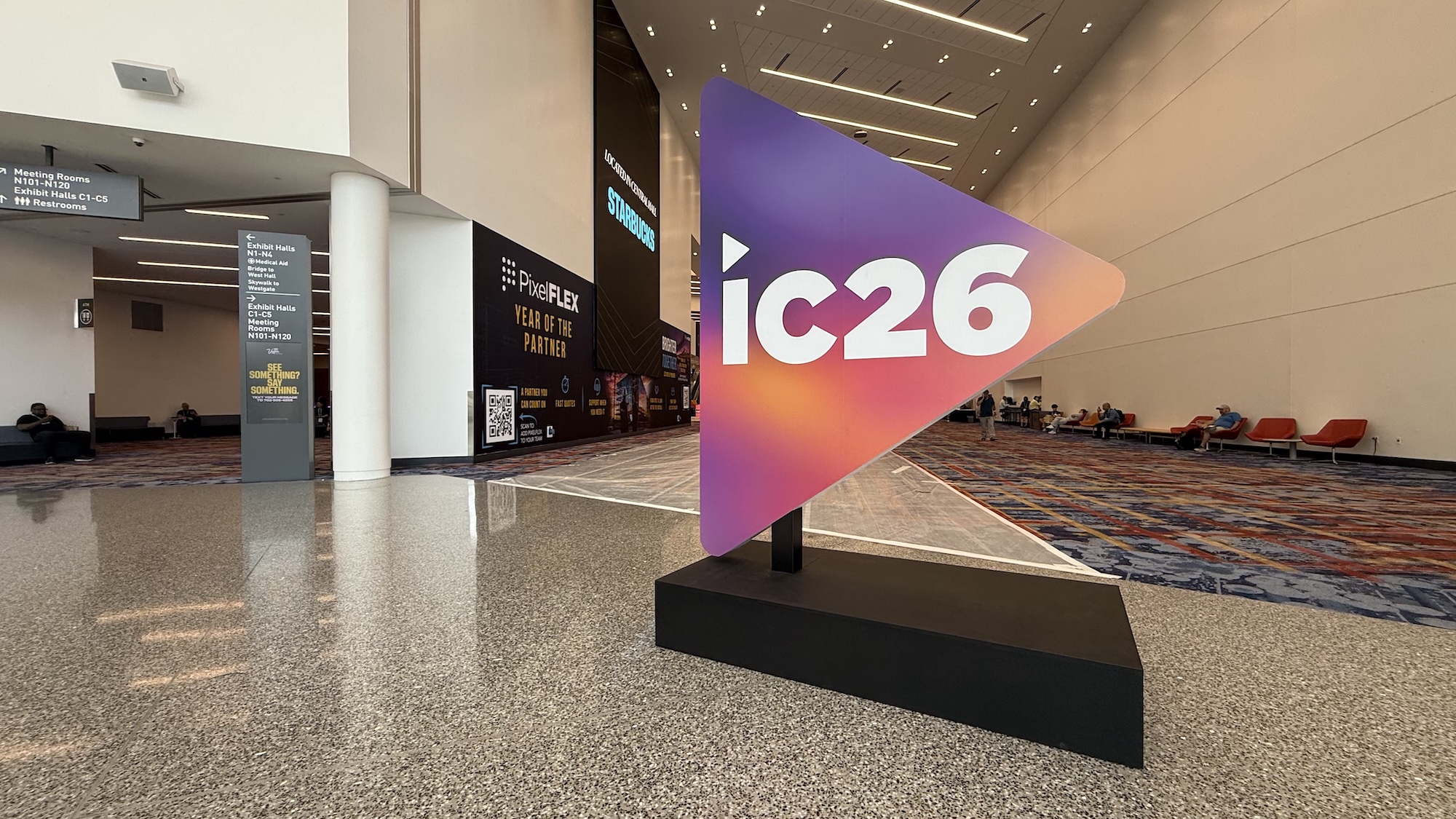

The residential custom integration channel is not lacking for trade shows. What it has been searching for, increasingly, is the right context.
That is what makes the coming co-location of RESIDE, Lightapalooza, and InfoComm something that’s not only worth watching, but has also already created a lot of noise while the first iteration is still over a year away.
On paper, the concept is simple enough: three shows, one badge, all under one roof. In practice, the challenge for the AVIXA, HTSA, and ProSource teams is far more delicate. Residential integrators need a space that feels built for them, not bolted onto a commercial AV event. Meanwhile, commercial AV professionals need clarity about why a residential-focused presence matters. And the manufacturers that serve both communities need the right buyers in the right room.
That was the message from AVIXA’s Jenn Heinold and HTSA’s Tom Doherty during our sit down with them in Las Vegas this week ahead of InfoComm. One year out from the official launch of the new co-located experience, the two discussed how RESIDE and Lightapalooza will fit into the larger InfoComm ecosystem.
“The biggest thing we’re talking about is, one, the event structure, and that it’s three co-located events with individual education offerings and a really focused show floor,” Heinold said. The idea, she explained, is to preserve InfoComm’s existing “Work. Play.” show floor approach while expanding it to include elements of RESIDE and Lightapalooza.
Listen: Doherty and Heinold on the Connected Design Podcast
The result will be a broadened “Work. Play. Live. Experience.” theme, one where the residential story begins to take shape. RESIDE is expected to focus on home automation, outdoor, audio, video, lighting, and other residential solutions. Lightapalooza, meanwhile, will retain its emphasis on lighting fixtures, controls, natural light management and the education-driven lighting conversation that has been the marquee of that event.
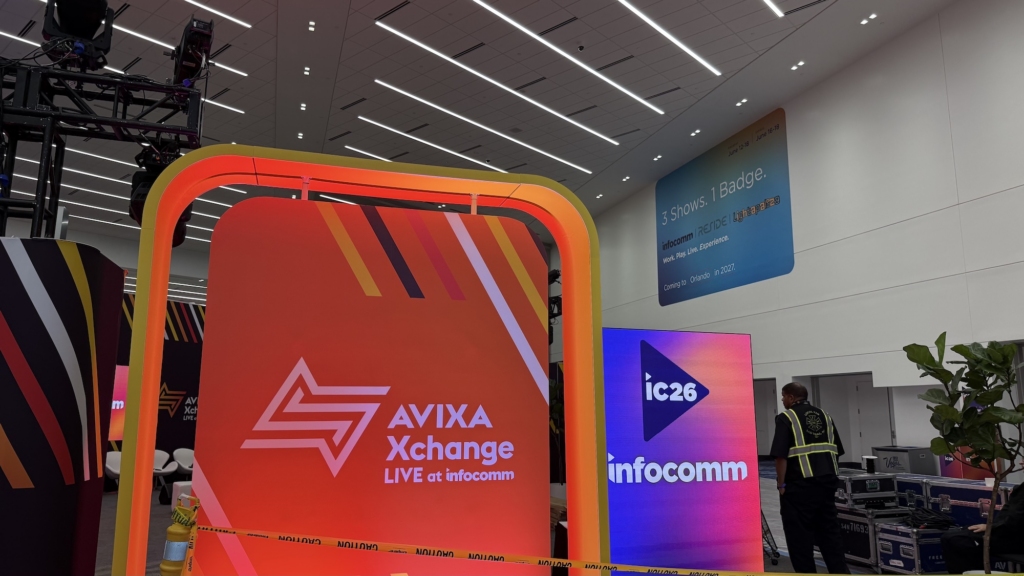
The goal in Orlando next June, Heinold said, is for the show floor to become “a continuum of solutions.” The concept, she said, suggests something more intentional than simply placing adjacent audiences in the same convention center.
Doherty expanded on that and said he sees that clarity as essential. In the absence of understanding, he noted, people tend to fill in the gaps themselves and make their own assumptions about what the expo and overall experience will be like.
“For [future attendees and exhibitors] to be able to see the show floor map and actually see the relationship of RESIDE, Lightapalooza, and InfoComm on the show floor, seeing it visually will just settle a lot of things,” Doherty said. “It’s like, oh, okay, that makes sense. So, let’s move on and talk about something else.”
Integrators have already watched the lines between the residential and commercial integration communities blur. CEDIA Expo/CIX, produced by Emerald, positions itself around the custom residential and light commercial systems integration industry, leaning into the reality that integrators are often being asked to support connected environments beyond the traditional single-family smart home. InfoComm, by contrast, has long stood as the central pro AV event, with its own education, certification, and commercial integration identity.
The opportunity for RESIDE and Lightapalooza is not to erase those distinctions, rather, it is to make them coexist in a useful manner. To that end, Doherty pushed back on the idea that this is a merger of commercial and residential communities. “We’re not merging them. We’re co-locating them,” he said—a subtle but important distinction.
Co-location, Tom and Jenn explained, allows organizers to expand opportunity without flattening identity. A residential integrator can stay focused on RESIDE and Lightapalooza, then step into InfoComm for ideas around conferencing, collaboration, digital signage, commercial lighting, or enterprise-grade infrastructure. A commercial AV attendee may not be looking to become a residential integrator, but may still find value in lighting conversations or product categories that cross both sides of the market.
Heinold described the attendee experience as a “choose your own adventure” model. “If you want to come to just RESIDE, take in that education and spend your time with those product solutions on that show floor, then that’s a great experience for you, and we’re going to build that,” she said. “If you want to explore InfoComm and Lightapalooza and venture out into other areas, then there’s no barrier.”
That no-barrier approach could be particularly valuable on the education side. Doherty has long emphasized Lightapalooza’s role as a serious learning environment, and he sees AVIXA’s education infrastructure as a major accelerant to those efforts.
“They’re just world class,” Doherty said of AVIXA. “They are the standard for quality education and certification.” With that support, he said, Lightapalooza can build on what it has already achieved while adding more residential influence.
That combination may be the real test. Trade show co-location is easy to describe and hard to execute well. The best versions create proximity without confusion—just look at something like Builders’ Week, which has seamlessly brought together designers and builders for KBIS and the International Builder’s Show. The weaker versions, which this channel has certainly seen its fair share of, leave attendees wondering whose show they are actually attending.
Heinold seems aware of that balance. InfoComm, she said, already functions as “many shows within a show,” serving live events, conferencing and collaboration, workplace technology, and other distinct communities under one larger umbrella. The task now is to apply that model to a residential community that deserves to be served on its own terms.
“We are really committed to maintaining that community piece and giving it its own identity,” she said.
That may ultimately be what determines whether RESIDE becomes more than a new event brand. Residential integrators do not simply need more square footage. They need an environment that respects how they work, who they serve, and where their businesses are headed. If RESIDE, Lightapalooza and InfoComm can deliver that while also opening the door to adjacent commercial ideas, the result could be a new kind of meeting point for the connected environment.
It is increasingly both, provided the communities have enough room to remain themselves.
