

 Commercial
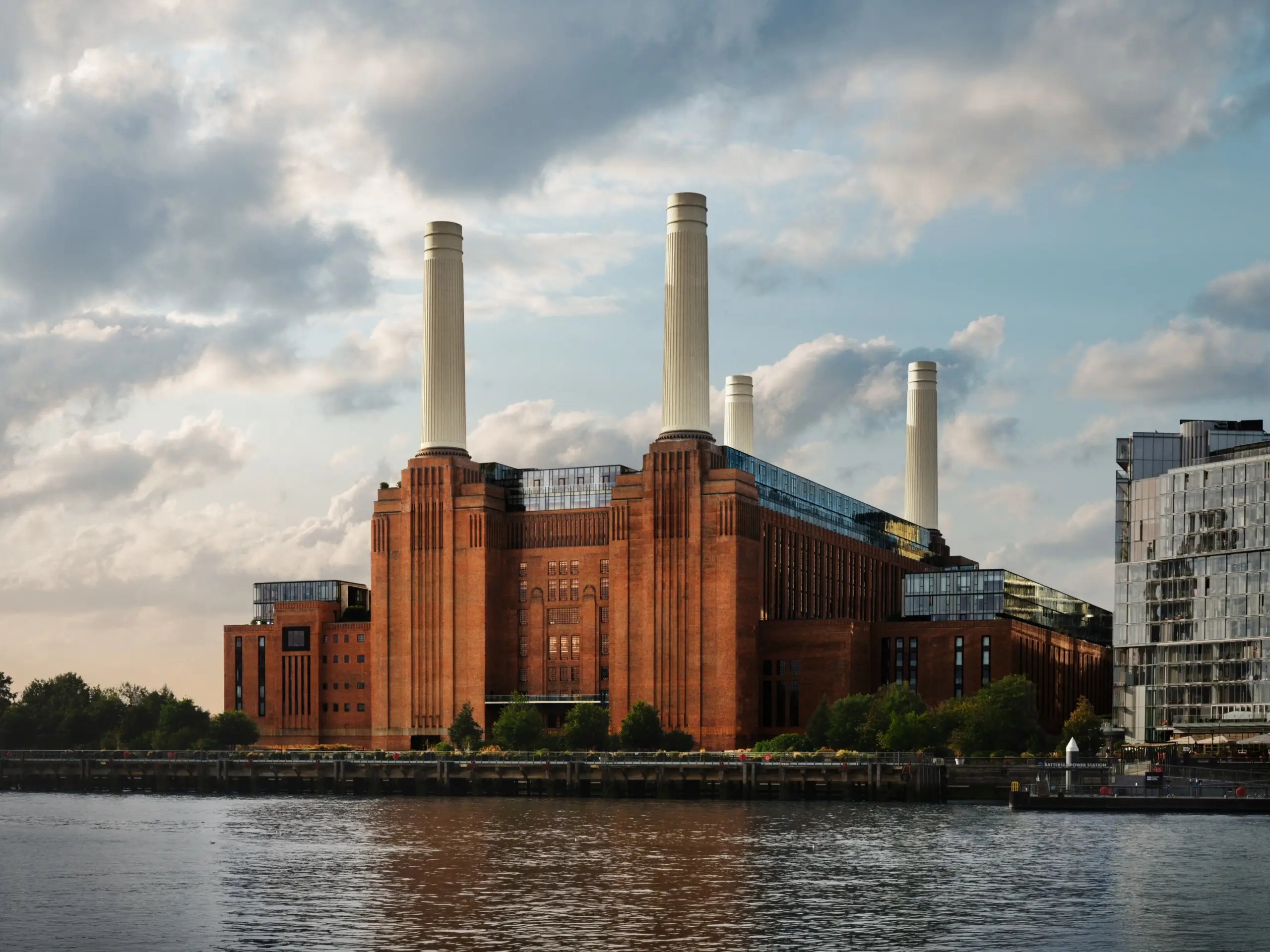
Battersea Power Station has become one of London’s most recognizable examples of adaptive reuse: an industrial landmark remade as a place for retail, work, culture, and gathering along the River Thames. Apple Music Hall now adds a live-performance layer to that setting, bringing a 600-capacity venue into the building with a brief that is part concert room, part production facility, and part global broadcast platform.
To us, the project is notable less as a typical venue opening than as an example of where performance environments are heading. Apple Music Hall is designed around the idea that a live show no longer has to be separated from capture, mix, spatial production, and distribution. The same room can host fans, give artists a controlled creative environment, and generate finished content for listeners well beyond London.
Apple announced the venue on September 21, 2026, positioning it as a space for bespoke, intimate performances rather than a scaled-down arena. The room’s capacity keeps the audience close to the artist, while the production infrastructure behind the stage gives performers access to tools normally associated with much larger live and broadcast environments.
An Intimate Room With Production Weight
The central design move is the venue’s balance between closeness and capability. Apple Music Hall holds 600 people, a scale that allows fans to feel physically near the performer. At the same time, the venue includes a 38-foot-wide stage that can support traditional front-facing performances or more in-the-round formats.
That flexibility allows the room to exist outside of the fixed black-box stage. It’s a performance environment that can adapt to the way an artist wants to present a one-time show. In a venue this size, reconfiguration is not just a technical feature; it changes the relationship between performer and audience.
The release also makes clear that Apple wanted the venue to belong to Battersea visually, not simply occupy space inside it. The design draws on the power station’s material language through heritage brickwork, fluted arches, and bronze balconies that echo the building’s historic oriel windows. A large glass wall keeps the venue connected to the concourse and views toward the river, making the site part of the experience rather than a neutral container.
Spatial Sound for the Audience
Apple Music Hall includes a 48-speaker spatial sound system positioned around the audience (a system that we recently learned was deployed by L-Acoustics). When an artist performs in spatial, the system allows the show to be heard as an immersive environment rather than as a conventional left-right presentation from the front of the room.

The release does not identify the loudspeaker manufacturer or system designer, but the functional intent is clear: spatial audio is not an add-on for postproduction alone. It is part of the in-room audience experience. That distinction is useful for integrators and designers watching the entertainment category evolve. Immersive audio is increasingly becoming something audiences encounter in physical rooms, not only through headphones or home playback.
In Apple Music Hall, the system supports the venue’s larger promise to artists. A performance can be staged for fans in the room and also captured in a format that supports Spatial Audio release or distribution after the event. The room becomes both the place where the show happens and the first stage of the content pipeline.
A Venue That Records Itself
Behind the stage, Apple Music Hall functions as a production facility. Two dedicated recording and mix studios allow performances to be captured as multitrack recordings and mixed in Spatial Audio either live or after the show.
That infrastructure is the heart of the installation story. Many venues can host a live event. Many studios can create polished audio. Apple Music Hall brings those functions together so the production work does not have to be rebuilt for every performance. For an artist, the value is straightforward: one show can generate the in-room experience, a finished Spatial Audio recording, a broadcast-ready mix, and supporting video assets.
For the professional audience, the broader takeaway is about workflow. As live music, streaming, and platform content continue to blur, venues are being asked to behave more like permanent production systems. The most interesting rooms will be judged not only by how they sound during the event, but by how efficiently they can capture, mix, stream, and archive the work that happens there.
Built for Broadcast From the Start
The video system follows the same integrated logic. Apple Music Hall is hardwired for 16 or more cameras feeding a dedicated broadcast control room. The infrastructure also supports iPhone video capture running alongside traditional broadcast cameras, giving the production team multiple capture modes from the same show.
That combination points to a modern broadcast strategy: professional cameras for the primary production, mobile capture for additional perspectives or platform-specific content, and a control environment that can shape the whole performance for audiences outside the room. Apple says performances from the venue will be livestreamed globally, extending these limited-capacity shows to fans who cannot attend in London.
For a 600-capacity venue, that global reach changes the economics and design logic. The room is intimate by design, but its audience is not limited to the people who can stand inside it. In practice, the venue has to serve two audiences at once: the fans close to the stage and the listeners and viewers experiencing the performance through Apple Music’s distribution channels.
Radio Moves Into the Same Cultural Hub
Apple also used the announcement to introduce new Apple Music Radio studios at Battersea. London-based Apple Music Radio hosts and shows will now broadcast live from the site, adding daily programming to the venue’s event-based use.
That matters because it makes Battersea more than a special-event address for Apple Music. The venue, studios, and radio operation together create a working music hub where interviews, premieres, live shows, and artist storytelling can happen under one roof. Apple Music Radio already functions as a place where artists and fans meet in real time; the new studios give that format a physical connection to the same building as Apple Music Hall.
What It Signals
Apple Music Hall is a useful marker for integrators, designers, builders, architects, and manufacturers because it shows how experience, architecture, and connected media infrastructure can be combined in a high-profile cultural space.
The most important feature is not a single device. Rather, it’s the way the venue is organized as a system. Spatial audio, recording, mixing, multi-camera video, live-streaming, and radio all support the same goal: make the artist-fan connection feel immediate in the room and durable beyond it.
That is the lesson worth carrying into other categories. Whether the space is a music venue, private cinema, hospitality environment, workplace, or high-end residence, the strongest connected experiences are no longer defined by isolated equipment choices. They’re shaped by how well the room, the technology, and the content workflow understand each other.
Venue Highlights
- 600-capacity live performance venue
- 38-foot-wide flexible stage
- 48-speaker spatial sound system positioned around the audience
- Two dedicated recording and mix studios
- Multitrack recording workflow with Spatial Audio mixing support
- Broadcast control room
- Hardwired infrastructure for 16 or more cameras
- Support for iPhone video capture alongside traditional broadcast cameras
- Global livestreaming infrastructure for Apple Music Hall performances
- New Apple Music Radio studios for London-based hosts and shows
