



 Commercial
For a five-star hotel built around history, views, and a deeply considered sense of place, technology has to do a delicate job. It needs to make the guest experience feel easier and more personal, without announcing itself as the main event.
That was the challenge at Bellevue Syrene, a boutique luxury hotel set on the cliffs of Sorrento, Italy, overlooking the Bay of Naples. The property blends 18th-century architecture with modern and antique furnishings across 51 guest rooms and suites, creating the kind of hospitality environment where every update has to respect the larger atmosphere.
The hotel’s previous television system had become too limited for the way guests now expect to travel. Streaming services, personal devices, secure casting, multilingual communication, and remote system management are no longer amenities that sit outside the luxury experience. Increasingly, they are part of how a stay feels effortless.
Working with local integration specialist Meginet, Bellevue Syrene replaced its aging in-room display system with a connected hospitality network built around 70 4K UHD Philips MediaSuite TVs from PPDS. The displays, ranging from 43 inches to 65 inches, were installed throughout the hotel’s guest rooms, with additional units placed in larger suites.
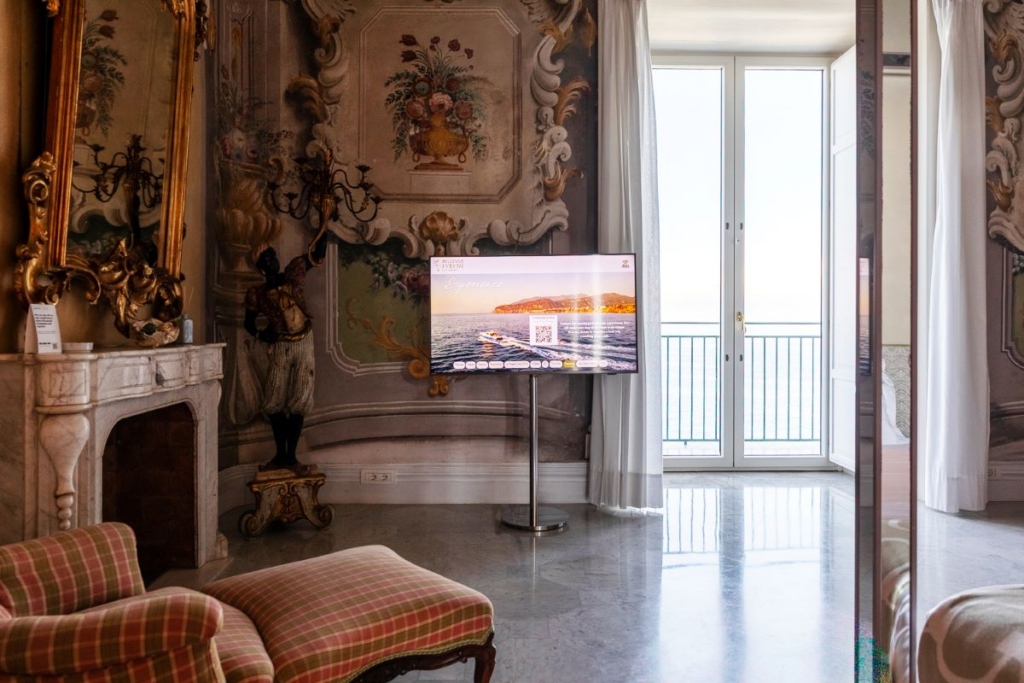
The result is not simply a room-by-room TV refresh. It is an in-room entertainment and communication layer designed to give guests the familiarity of their own streaming environment while giving hotel teams a more manageable, future-ready system behind the scenes.
One of the most important guest-facing pieces is built-in casting. Guests can connect a personal smartphone or tablet to the room display using a unique QR code, then stream content from services such as Netflix or Amazon Prime Video without needing to log into a shared hotel interface. The setup supports the kind of private, familiar behavior guests already use at home, while keeping the room experience simple.
That matters in a luxury hospitality context because personalization should not require explanation. A guest returning from a day in Sorrento can continue watching a series, share photos, listen to music, or use the display for a presentation without calling the front desk or navigating an unfamiliar menu system.
The system also addresses one of the less visible but increasingly important parts of hospitality technology: what happens after checkout. Login information is automatically removed when a guest leaves, reducing privacy concerns and taking a manual task off the staff’s list. For the guest, the technology disappears cleanly. For the hotel, the process becomes more reliable and efficient.
Behind the scenes, Bellevue Syrene’s AV and IT teams can manage the display network centrally through PPDS’ CMND platform. Software updates, security improvements, feature rollouts, and display customization can be handled remotely, which is especially important in a property where service disruptions and room-by-room maintenance visits can quickly interfere with the premium guest experience.
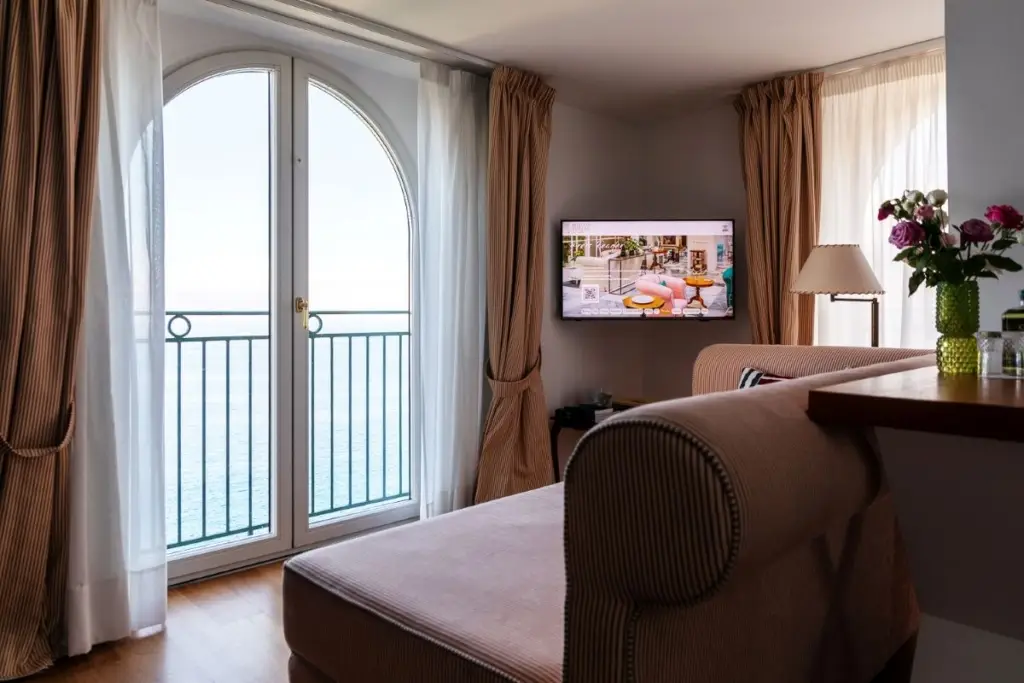
The same platform also gives hotel staff a more flexible communication channel inside the room. Welcome messages, hotel information, checkout details, promotions, and other guest-facing content can be created and delivered to the screen collectively or on a more personalized basis. In that sense, the display becomes more than an entertainment endpoint. It becomes part of the property’s service language.
Claudio Napolitano, general manager of Hotel Bellevue Syrene, said the hotel looks for technology partners that can support “valuable, reliable and cutting edge technologies” while contributing to a complete and memorable stay. Vittorio Acampora, CEO of Meginet, pointed to the importance of a solution that combines innovation with ease of use.
Those comments get at the larger lesson for hospitality projects like this one. The most successful technology integrations in design-led environments are rarely the ones that call attention to the product first. They are the ones that understand the rhythm of the space, the expectations of the guest, and the operational realities of the property.
At Bellevue Syrene, the upgrade gives an historic hotel a more modern entertainment experience without pushing against the character that makes the property distinctive. That balance is increasingly the point of connected hospitality design: not technology for its own sake, but technology that makes a beautiful stay feel more natural.
