



I’ll skip the part where I tell you AI is coming for our industry. You already know that. What I want to share is what it actually looks like when you stop watching from the sidelines and start building with it.
We’ve been using AI at GWI for about a year now. Not as a project. Not as a thing we’re testing. Just as part of how we work. Some of what we’ve built is straightforward. Some of it has genuinely changed how we operate. None of it feels like the future anymore.
Here’s what’s working.
1. Showing clients what their home will feel like before we pull a single wire
This one has changed client conversations more than anything else we’ve done.
You Tell Us: How Are You Using AI?
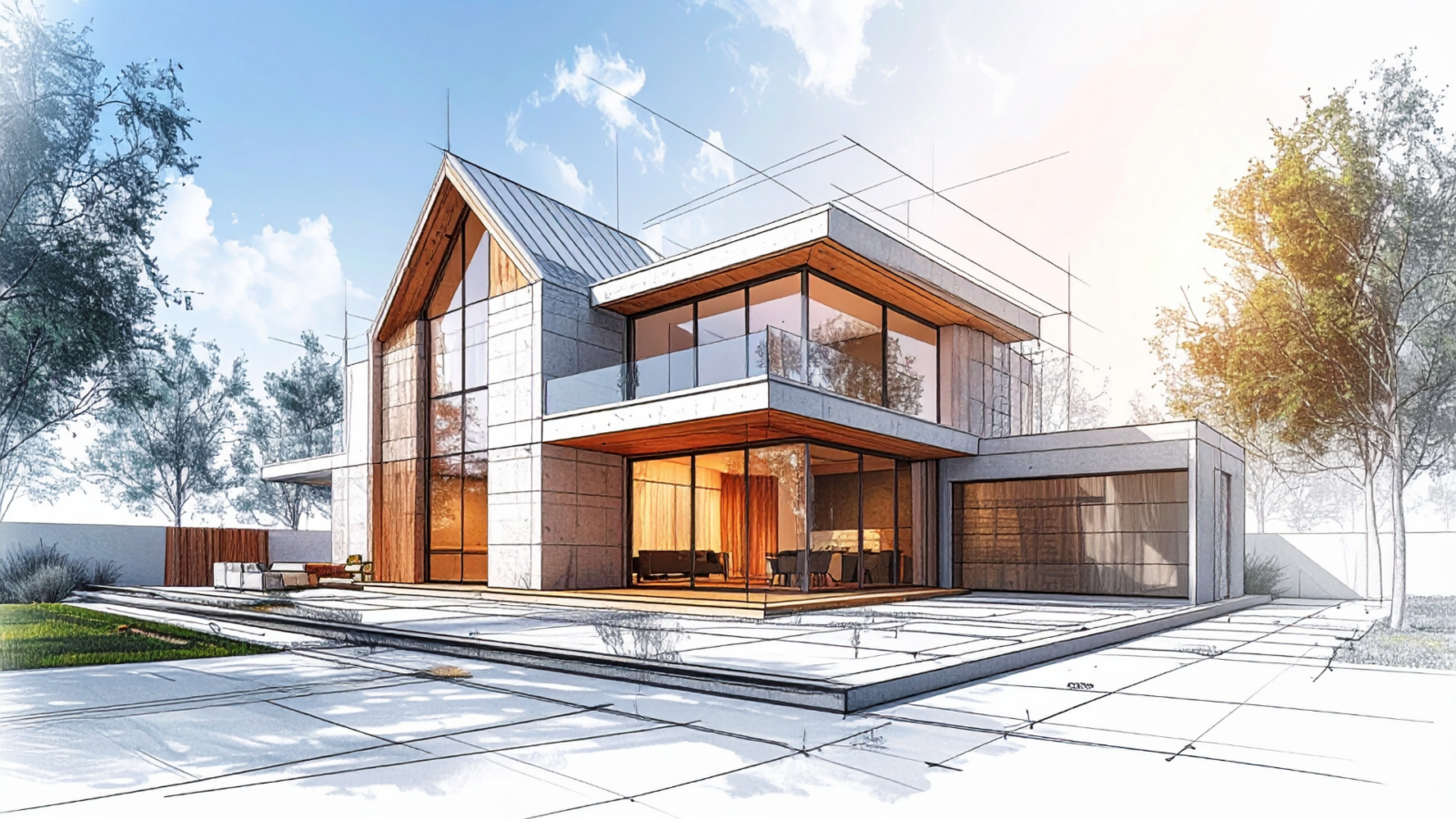
Our work mostly lives behind walls and inside equipment racks. By the time there’s something worth photographing, the design decisions have already been made. We’re using AI to generate high-fidelity visual concepts now, how a room reads at different times of day, how a lighting scene shifts the atmosphere, how a media room feels when it’s dialed in. Not architectural renderings. Experiential previews.
When a client can see and feel the ambiance before we spec the system, something changes in the room. The conversation gets faster. The decisions get more confident. The aesthetic and technical discussions start happening in parallel instead of in sequence and everyone at the table benefits.
Register: Connected Design’s AI Roundtable
We are lifestyle designers first. AI tools that help clients understand how a space will feel are exactly the kind of tools we should be using.
2. Communicating better with architects, designers, and the people who set the stage for our work
The design community doesn’t wait for slow partners. Architects and designers are managing dozens of relationships. If you’re not fast, you’re not in the conversation.
AI has helped our team show up better and follow up faster. We use it to draft project briefs, translate technical documentation into design-friendly language, and prepare materials that speak to what our design partners actually care about, not spec sheets they didn’t ask for.
The result: less time on document production, more time on the conversations that move projects forward. When we follow up, we do it the same day. That pace earns credibility with design professionals who are managing dozens of relationships simultaneously.
The best integrators make estate managers and design teams look good to their clients. That’s our job. AI helps us do it consistently.
3. Actually listening and remembering everything a client tells us
Understanding what a client wants versus what they say they want is one of the most nuanced skills in this business. Ultra-high-net-worth clients have strong instincts about how a home should feel. They don’t always have the vocabulary to describe it technically. Translating aspiration into specification takes years to develop and it requires genuine attention across every conversation.
We use AI as a thinking partner in that work. Not to replace the conversation. To make us better prepared for it.
Before client meetings, we use AI to synthesize notes from prior touchpoints and surface patterns we might have missed. After meetings, we use it to organize what we heard, reflected back in the client’s own language. It catches the details that matter: a comment about a previous home, a preference mentioned offhand, a concern about one specific room.
In luxury work, those details are everything. The clients who trust us most are the ones who feel heard. AI helps us actually be that.
4. Getting the paperwork out of the way so the team can do real work
Behind every luxury project is a mountain of paperwork nobody talks about. We haven’t eliminated it. We’ve just stopped letting it slow us down.
We use AI to take first passes at all of it. Draft language for client communications. Structured summaries after site visits. Scope narratives the team then refines with their own judgment.
The output isn’t always final but it’s usually most of the way there. Which means the team’s attention goes to the parts of the work that actually require expertise, taste, and creative thinking.
Over time, the whole team gets faster, and you stop being one person’s absence away from a delayed proposal. Effort is not a skill. What matters is getting it out of the way so the real work can happen.
5. Building the care-enabled home (what I think is the most important category in our industry’s next decade)
This is the one I spend the most time thinking about.
75 percent of adults over 50 want to stay in their own homes as they age. That population will nearly double by 2040. These are our clients. Their parents. Their futures. And our industry has largely left this conversation untouched.
Through FutureCare Solutions Group, we’re building what I call care-enabled living technology: passive sensor-based monitoring that learns what normal looks like for a specific person and surfaces meaningful changes to family and care teams when something shifts. No cameras. No wearables. No buttons to remember to press.
The smart home, in this context, becomes something closer to a care environment. And AI is what makes the behavioral intelligence possible at scale.
I’m not overstating what’s ready today. But I believe this category is arriving faster than most people expect and the integrators who understand it first will own the next decade.
The part I’ll be honest about: I don’t share every detail of how we use these tools. Some of what AI enables for GWI is a competitive edge we’ve worked hard to develop.
What I do believe is that the conversation matters for our industry, for our clients, and for the design professionals we work alongside. AI isn’t going to replace judgment, taste, and craft. What it can do is free up more time and attention for exactly those things, and that’s the trade worth making.
Adoption and adaptation. That’s what thriving in the age of AI actually means.
