


The numbers aren’t really surprising: As Gen Z reaches homebuying age, the first “digital natives” are accustomed to smart home solutions — in fact, more than 70 percent of those recently surveyed by Green Builder Media responded that these solutions are “critical today,” not in the future.
With ever-broadening adoption, however, challenges still remain. What is surprising is how many of those consumer concerns have yet to be alleviated in the public’s mind. A 2026 survey conducted by Horowitz Research includes concerns that would have been familiar to technology integrators 15 years ago: “While two-thirds of smart homeowners say these devices make their lives easier, managing and maintaining these devices can become complicated.”
For a dealer or other specifier, the best way to alleviate those concerns is to understand what they might be ahead of the discovery conversation. Some of the most common of these myths we’ve heard from homeowners (still!) include the following:
I’ll never be able to figure out how to set it up or maintain it. It’s just too complicated.
It’s pretty unfortunate that a lot — a LOT — of consumers had their first introduction to smart home technology via less-than-intuitive DIY (do-it-yourself) devices. Many of the early interfaces were clunky, with exceptions — most notably the biggie: The “connected” thermostat. The thermostat took note of what temps were preferred when, and after “observing” the residents of a home, acted accordingly.
The thing to remember here is that vast numbers of these thermostats were installed by HVAC professionals, not homeowners. Yes, some people are completely comfortable handling their own plumbing or electrical systems. Most folks aren’t, and tech has evolved to the point where a professional installer (and, moreover, a system designer) is terrifically helpful. Bottom line? Left to a pro, the results can be absolutely life-altering.
It’s just a bunch of fragile, gimmicky devices.
There was a period of time when the word “smart” was hung on literally everything: A favorite example is the “smart water bottle” introduced at a consumer electronics show some years back which told your phone when it was empty. The bottle was made of transparent plastic — which meant the bottle’s app on your phone served the same purpose as simply looking at the thing.
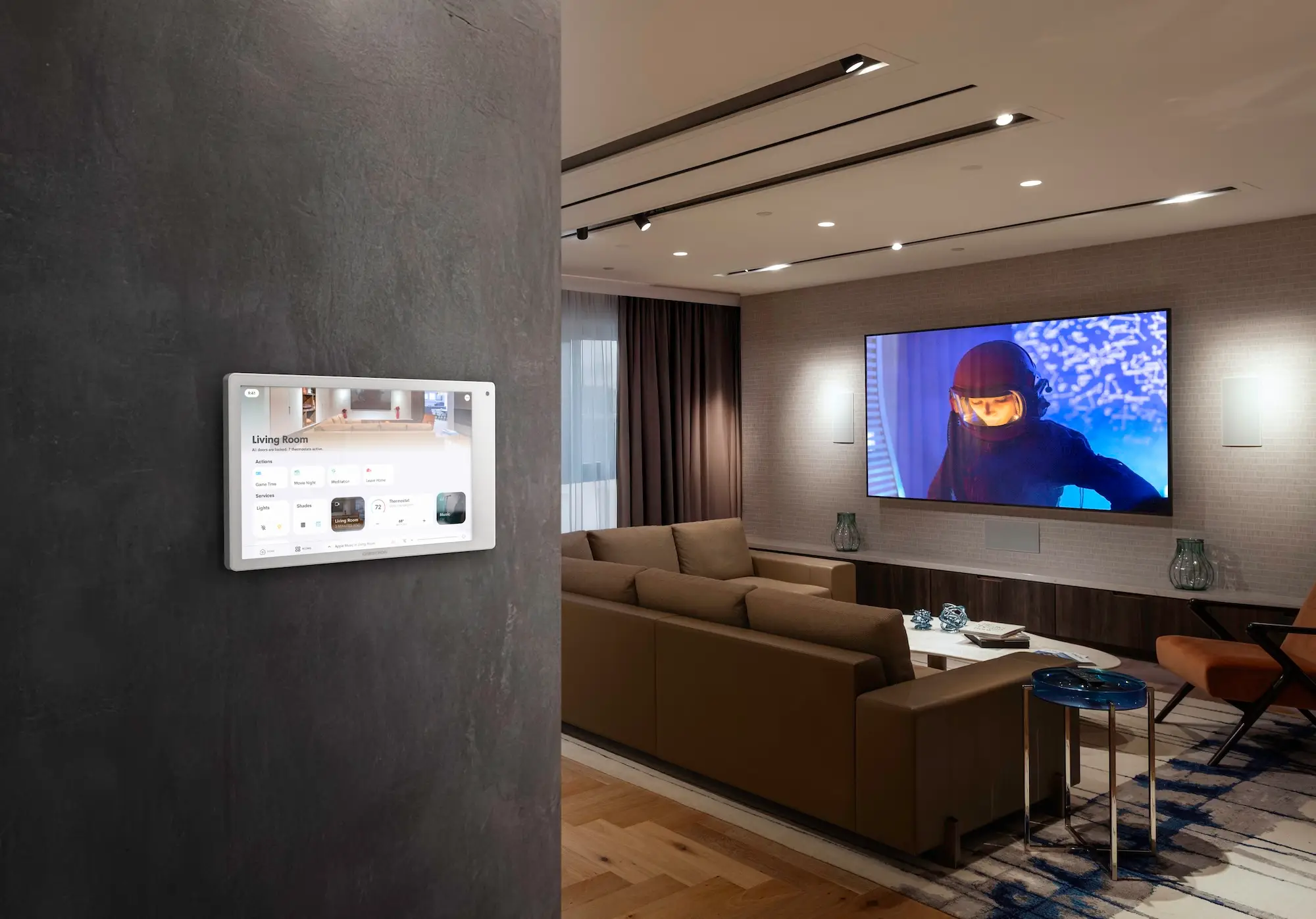
When the tech can actually provide concrete benefits, from adding the right security, HVAC, and lighting solutions to making entertainment options more readily available, then it’s doing what it should — and that’s precisely what happens with the right system in place. An example: Chase Bouchard, one of Crestron’s solutions engineers, has the Crestron Home® platform in his residence. “It’s made my life easier,” he says. “I used to get glare from another building’s windows at my desk, and now my shades close at the time of day that would occur. My girlfriend used to be upset when I forgot to turn the lights off at night, but now I don’t have to worry about that. The lights turn off by themselves at a specific time.”

None of this stuff works when I need it to or the way it’s supposed to, and none of this stuff works with the other stuff.
There are companies (and Crestron’s a leader in this department) creating ecosystems such as Crestron Home OS that are incredibly reliable — and work with specific third-party devices and applications. That interoperability is key to creating the right smart-home experience.
Think about the automation in your car: It’s all branded Lexus or BMW or what-have-you, even if some parts and devices are made by other firms. Yet the light comes on when you open the door, the locks recognize your fob when you approach, the backup camera clicks on when you put it into reverse. Your vehicle is an ecosystem of automotive automation. Everything works together. Your home can be just as intuitive — and just as dependable.
It’ll go haywire every time there’s an update.
Yes, systems are becoming more complex — but they’re also maturing. That prevents a lot of hiccups when software and firmware are updated. Back to the car analogy: The vehicle needs service sometimes. So does your home technology system. The best technology designers and installers offer regular service contracts (akin to what you may have with your HVAC service company), and they know how to fix many issues remotely. Of course, prevention is the best defense against bugs: “The software and firmware we develop is tested just as rigorously as the hardware,” adds Bouchard.
This stuff is spying on me and collecting data about me. Additionally, this stuff just gives hackers more ways to get into my house.
Security has layers — and as devices become ever more guarded against intrusion, it turns out the weak link in most networks is often the human using the stuff. As for privacy, yes, it’s a huge concern — but once again, having a pro design your smart-home project will help both protect your data and firm up your defenses. That’s especially important as the lines between work and home become ever more blurry — remote workers have a unique responsibility when it comes to data protection and privacy. As for Crestron, there’s a commitment to keeping the gear safe from intruders: As Bouchard further notes, “We’ve implemented protocols for our products so that they can go into the Pentagon. They’re that secure.”
