



What’s old is new, as they say. And what was once thought to be a tired technology, replaced by the devices we all carry around on our person 24/7, seems to be experiencing a resurgence. The universal smart remote is back in the news cycle in a big way over the past few weeks.
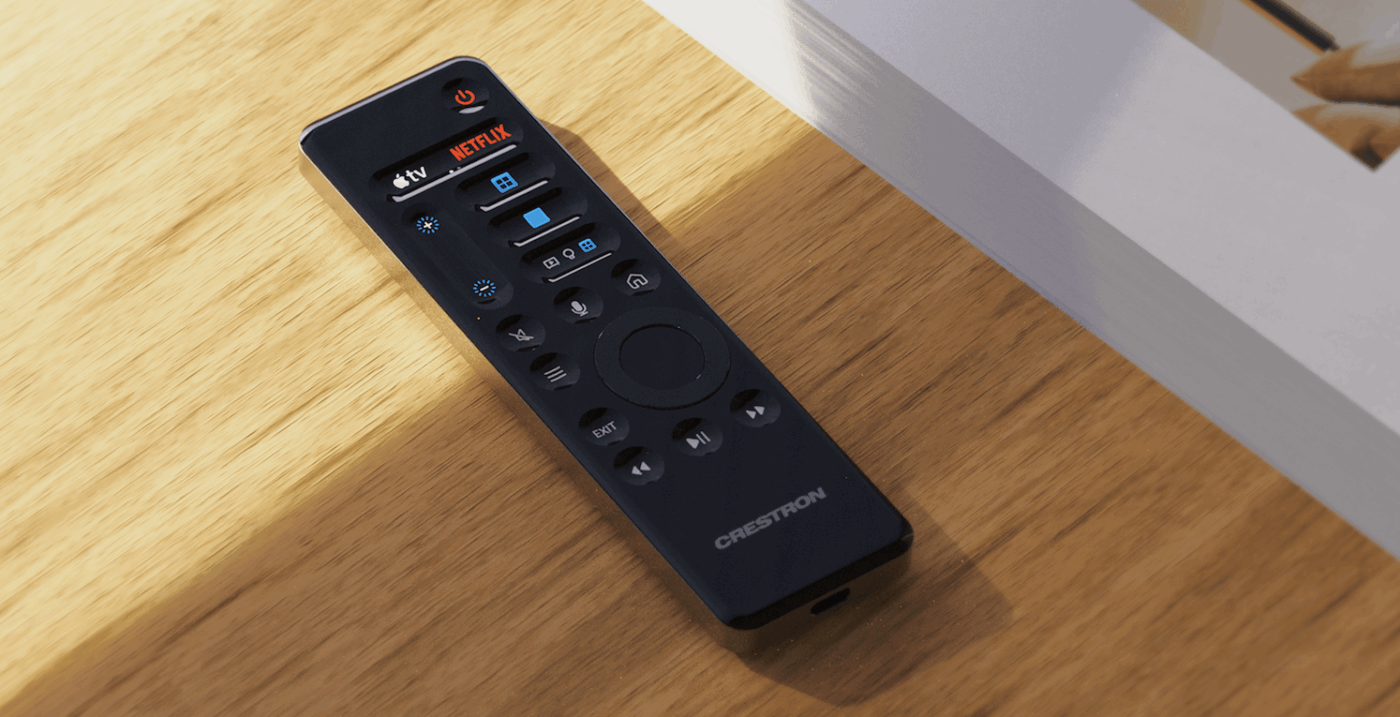
First, it was the launch of the Crestron Cevo Mini back at the 2025 CEDIA Expo. And that was followed by the long-awaited launch of the Josh.ai Edge remote in late December. Both products showcase a unique evolution of a category that was once all the rage but perhaps just a little ahead of its time—or misused altogether. Now, though, smart remotes appear to be ripe for growth and are back with a vengeance, and I can think of a few reasons why that we’ll dive into shortly.
As a market, the global universal remote market was valued at around $4.52 billion in 2025 and could increase modestly to around $4.72 billion this year, according to data from Polaris Market Research. The report notes that the category could reach a value of around $7.48 billion globally by 2034, representing an annual growth rate of about 5.9 percent.
So, why the (projected) growth?
Consumers have “the need for a single, reliable interface that makes today’s mixed AV environments feel effortless,” Crestron’s VP of Marketing Operations and Residential Michael Short told Connected Design. “As the home adds more connected devices, premium remotes that streamline control are becoming essential rather than optional.”
It doesn’t seem like that long ago that consumers were making cracks about adding another remote to their collection—one for the TV, one for the sound system, one for the ceiling fan, you name it. Universal remotes were supposed to be the answer. Apple co-founder Steve Wozniak is actually credited with inventing the first such device (the CL 9 remote) back in 1987. The challenge has always been consumers’ inability to comprehend a device that seemed so complex with so many buttons. Short put it perfectly to us in saying that those old universal remotes ranged between “brilliant and painfully over-engineered.” They were supposed to get rid of the clutter, but they wouldn’t “just work.”
And then there was rise of the smartphone. App-based control of different devices all packed into one product that we carry with us all the time anyway. But even that quickly led to a reality that I know, for certain, we’ve all experienced in both our personal and professional lives: App fatigue.
According to an app market analysis from mobile app ad firm Aarki (covered by ZDNet last year), smartphone users are downloading and using apps at an increasingly lower rate. The report showed that the average smartphone user explores between 40 and 100 new apps, with the average device holding between 80 and 100 apps. However, only about 10 to 15 apps become the daily drivers—and they’re typically gaming, creativity, shopping, or entertainment related in nature.
Layer into that all of the different devices and platforms that might require control in today’s smart home, and you can start to understand why awareness around this “condition” has increased. It’s the ultimate first-world problem to have, but we’ve all been there. Digging through our phones, trying to remember the name of the app or which screen it’s located on, waiting for it to load—God forbid you have to remember a password to get into it. All of that, just to lower a shade so you can go to bed.
It sounds trivial, but that experience might help explain why the physical smart remote has more meaning today. The remotes of “old” were entertainment-centric devices, focused on clearing clutter while combining audio and video equipment control onto a single device.
There might be some of that on devices like the Cevo Mini and the Edge remote. But where they stand out is in their customizability. Rather than attempt to solve a single problem, the devices are consumer-centric, allowing the user to mold the product into something that suits their needs.
“What’s different now is that consumers want choice,” Short said. They want “a remote capable of doing everything with deep system access, like our touchscreen remote, or a simple, luxury, single‑room handheld like the Cevo Mini that’s easy to use but still unifies the entire experience.”
Entertainment control still exists (especially on the Cevo Mini), but the ability to swap out services, or completely change the functionality of certain buttons make these ideal for today’s smart home dweller, while also making them future-ready solutions.
Sure, it can be a cool party trick, showing friends how a command like “Josh, it’s time to party,” can turn your home into a low-lit, music-on living space. But, to Short’s point, many of us still enjoy tactile control of our surroundings, or maybe just not having to talk to AI to execute a simple action. Accomplishing it with the press of a single button sounds simpler. And if I can do it without fumbling through my phone or having to search for a separate remote—even better.
Two truths seem to be at play here: The technology has caught up to the smart remote’s capabilities. And smart remote makers have evolved these products to make them more practical to today’s smart home environment and end user. The perfect recipe for a resurgence in this niche market.
