

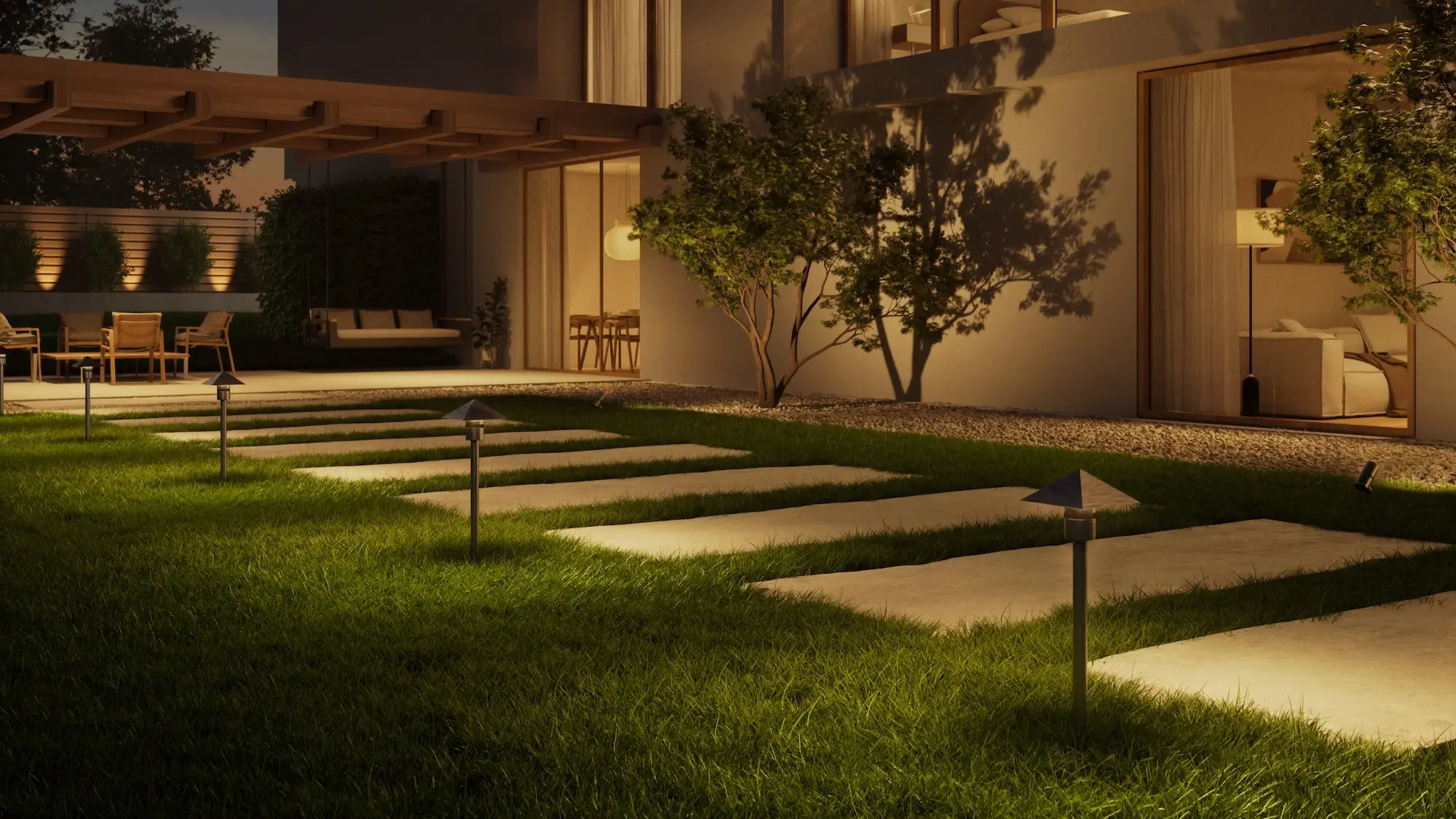

Outdoor lighting systems are becoming increasingly sophisticated, with advances in light quality, optical design and intelligent controls creating new possibilities for designers.
For example, a patio might call for brighter illumination when entertaining, then transition to a softer, warmer atmosphere as the evening unfolds. Pathways, architectural features and garden areas can each have distinct lighting treatments, coordinated to create a cohesive experience across the property. As expectations for outdoor lighting evolve, homeowners, designers and integrators have more opportunities to shape how an entire landscape looks and functions.
Realizing that potential, however, requires engineering for conditions that indoor lighting systems don’t face. Outdoor fixtures and infrastructure need to withstand moisture, temperature fluctuations, irrigation and corrosion. Large installations may also involve hundreds of fixtures connected through extensive underground wiring. Ensuring consistent performance over time means designing every component to work together reliably.
Engineering for the Elements
Outdoor conditions shape engineering decisions long before a product reaches the installation site. Materials like solid brass offer advantages in demanding landscape applications, particularly where corrosion resistance matters. Similarly, engineers must consider the long-term effects of exposure on seals and other vulnerable interfaces, especially when repeated temperature changes can compromise integrity.
Outdoor fixtures must tolerate changes in temperature and solar exposure, and thermal management becomes an even bigger consideration as advanced LED modules are introduced. Safeguards such as thermal rollback can reduce output if a control fault leaves the lighting operating during daylight hours. As lighting systems become more sophisticated, engineering for these conditions becomes increasingly important.
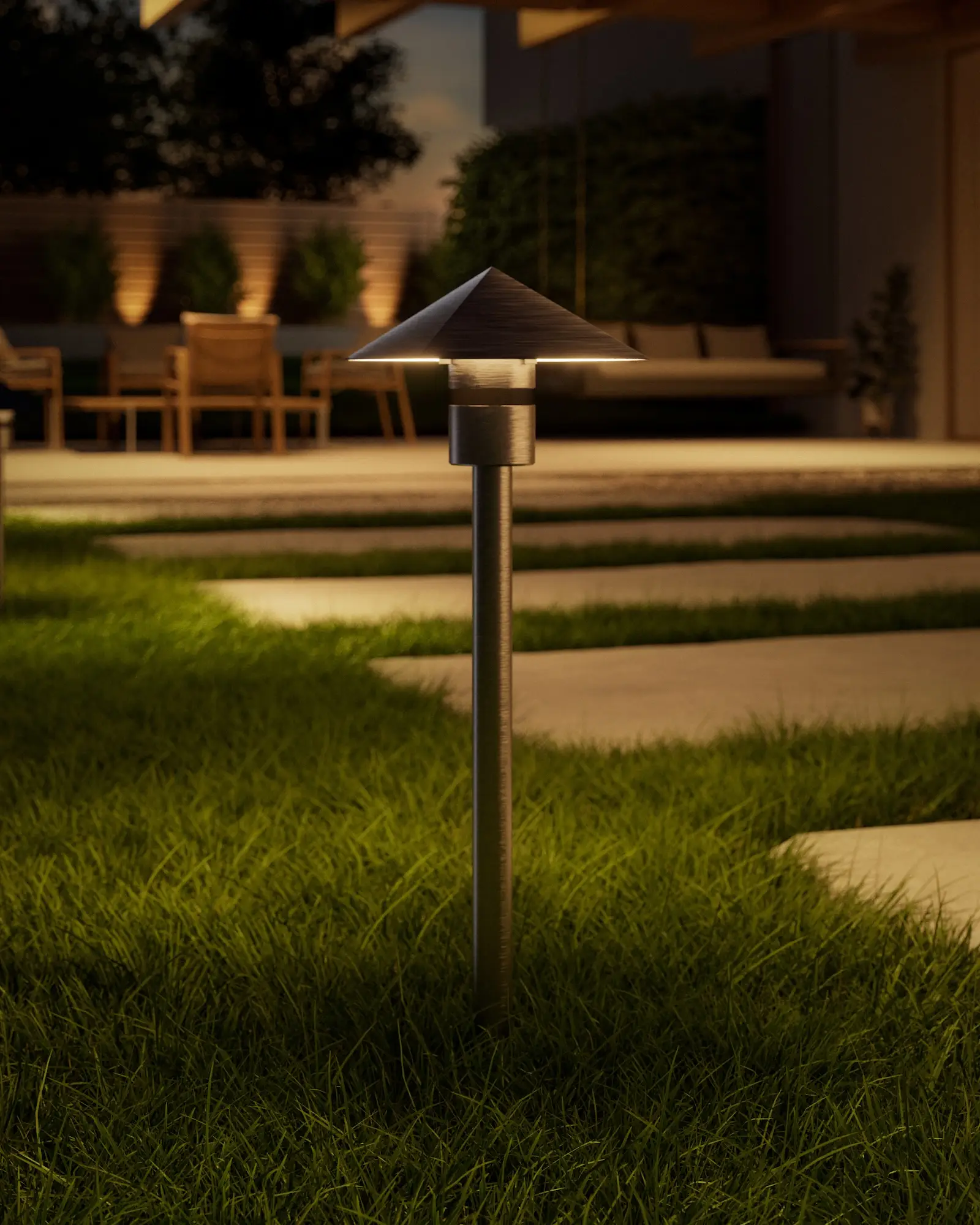
Light Quality, Control and Design
Outdoor lighting has typically emphasized the illumination of landscape features and architecture, but advanced controls now give designers the ability to shape how a space feels and functions. Lighting can support an active gathering, create quieter areas for conversation and guide the eye through the landscape without overwhelming it.
Optical design is central to that experience. Careful beam distribution can reveal architectural details while minimizing glare and unwanted light spill. Lower, more precisely controlled illumination can create greater visual depth while also reducing energy consumption. The objective is not necessarily more light, but better light, applied with intention.
The opportunity becomes even more compelling when lighting is coordinated across the property. Interior and exterior systems can share scenes, creating a consistent atmosphere across adjoining spaces. Designers can increasingly treat the home and its surrounding landscape as a unified lighting environment.
Standing the Test of Time
Environmental testing is essential to understanding how outdoor equipment will behave year after year. Corrosion exposure testing can reveal weaknesses in materials or finishes, temperature testing helps assess electronics under demanding conditions, and water intrusion testing can expose gaps in protective sealing.
Additionally, testing must extend beyond individual fixtures to the electrical connections and infrastructure that support them. A fixture that performs well in isolation offers little reassurance if a vulnerable connection can interrupt power. Finding those weaknesses during development gives engineers the opportunity to refine the complete system before it reaches the field.

This approach underpins the Coastal Quality philosophy, which focuses on designing and testing fixtures, connections and infrastructure to perform reliably as a whole in outdoor conditions. Engineering must account for how equipment will be installed and serviced, especially where components may become difficult to access as landscaping matures.
For integrators, these choices can have business consequences. Repeated maintenance visits increase costs and can damage customer confidence. Equipment designed for a longer operational life, with dependable outdoor connections, reduces the likelihood of expensive remedial work. Durability also supports responsible lighting design: longer-lasting equipment reduces replacement waste, while precise optical control and intelligent dimming can limit unnecessary energy use.
Consistency Beyond the Fixture
The infrastructure behind an outdoor installation deserves as much attention as the fixtures themselves. On a large property, finding an issue may require tracing buried cables or disturbing established landscaping. A small component failure can quickly become an expensive service visit, which makes connection design and protection especially important.
Controls present similar challenges. Some wireless solutions have struggled to deliver reliable performance outdoors, particularly across larger properties. In our own engineering evaluations, we have found that technologies capable of performing well indoors do not necessarily translate to installations across large outdoor environments.
Power interruptions can reveal weaknesses as well. Depending on the control architecture, a system may miss a scheduled command during an outage and fail to restore the intended lighting scene when electricity returns. Such failures can undermine the consistent lighting experience a designer has worked to create.
That is why these potential failure modes must be addressed during product development. Reliability depends on how fixtures, connections, infrastructure and controls perform together under real outdoor conditions.
This is an exciting time for outdoor lighting design as advanced light quality and control become available in purpose-built outdoor systems, designers can approach terraces, gardens and entire landscapes with greater creative freedom. The engineering challenge is to ensure those possibilities can be realized reliably, delivering the same quality of experience for years to come.
