


 Commercial
In a historic church, sound is part of the architecture whether the technology is visible or not. The Church of Ognissanti in Florence makes that relationship especially delicate. Dating to the 13th century, the church remains an active parish while also drawing visitors to its Renaissance art and architecture, including Sandro Botticelli’s *St. Augustine in His Study*, commissioned by the Vespucci family in 1480.
That dual role created a familiar challenge for historic houses of worship. The church needed spoken liturgy, sermons, concerts and cultural programming to be heard clearly, but any audio upgrade had to respect the character of a protected building. More loudspeakers were not the answer if they competed with the room they were meant to serve.
Designing for Restraint
Ognissanti’s 35-meter nave, vaulted ceiling and reflective masonry surfaces created long reverberation times that reduced speech intelligibility. Traditional distributed audio would have added multiple visible sound sources throughout the sanctuary, creating both preservation and design concerns.
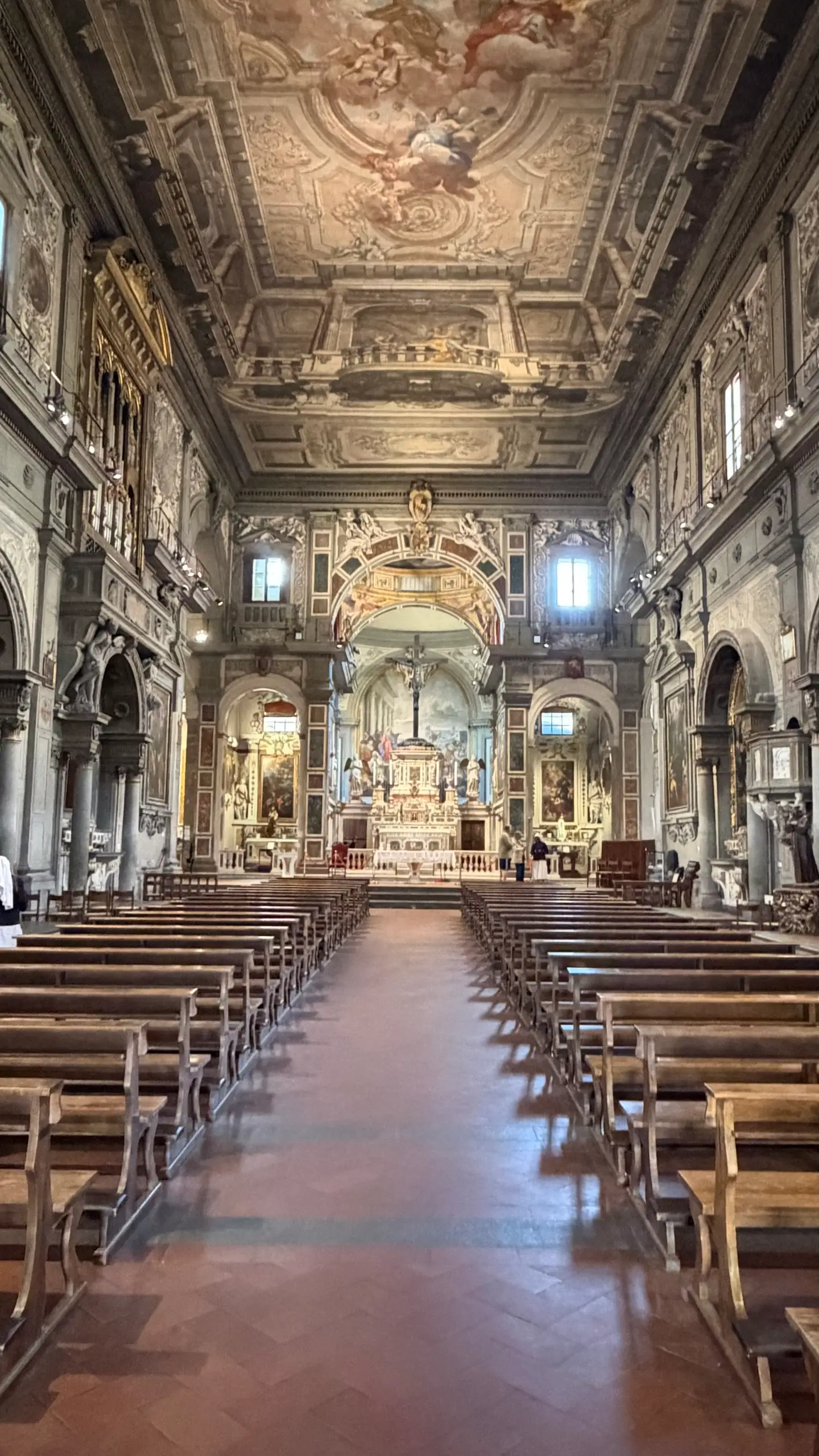
Exhibo approached the project through acoustic measurement, three-dimensional modeling and beam-steering simulation before specifying a compact system centered on JBL Professional Intellivox column loudspeakers. The design uses only two Intellivox loudspeakers, installed on either side of the central nave, to direct sound toward the congregation while limiting energy sent toward the walls and vaulted surfaces.
“The goal was clear: improve speech intelligibility throughout the central nave without introducing invasive elements or multiplying sound diffusion points,” said Andrea Ficara, Product Specialist at Exhibo S.p.A. “Acoustic simulations enabled us to identify the optimal positions for the JBL Intellivox loudspeakers and predict how sound would behave within the liturgical space.”
Sound That Complements the Sanctuary
The Intellivox loudspeakers use JBL’s Digital Directivity Synthesis technology to shape coverage across the nave. In practice, that means the system can aim speech where listeners are seated while reducing reflections that would otherwise blur spoken words in a reverberant room.
Behind the altar, JBL Professional COL800 column loudspeakers provide localized reinforcement for the presbytery. That addition gives the altar area its own coverage while maintaining the same slim, visually quiet loudspeaker profile used elsewhere in the sanctuary.
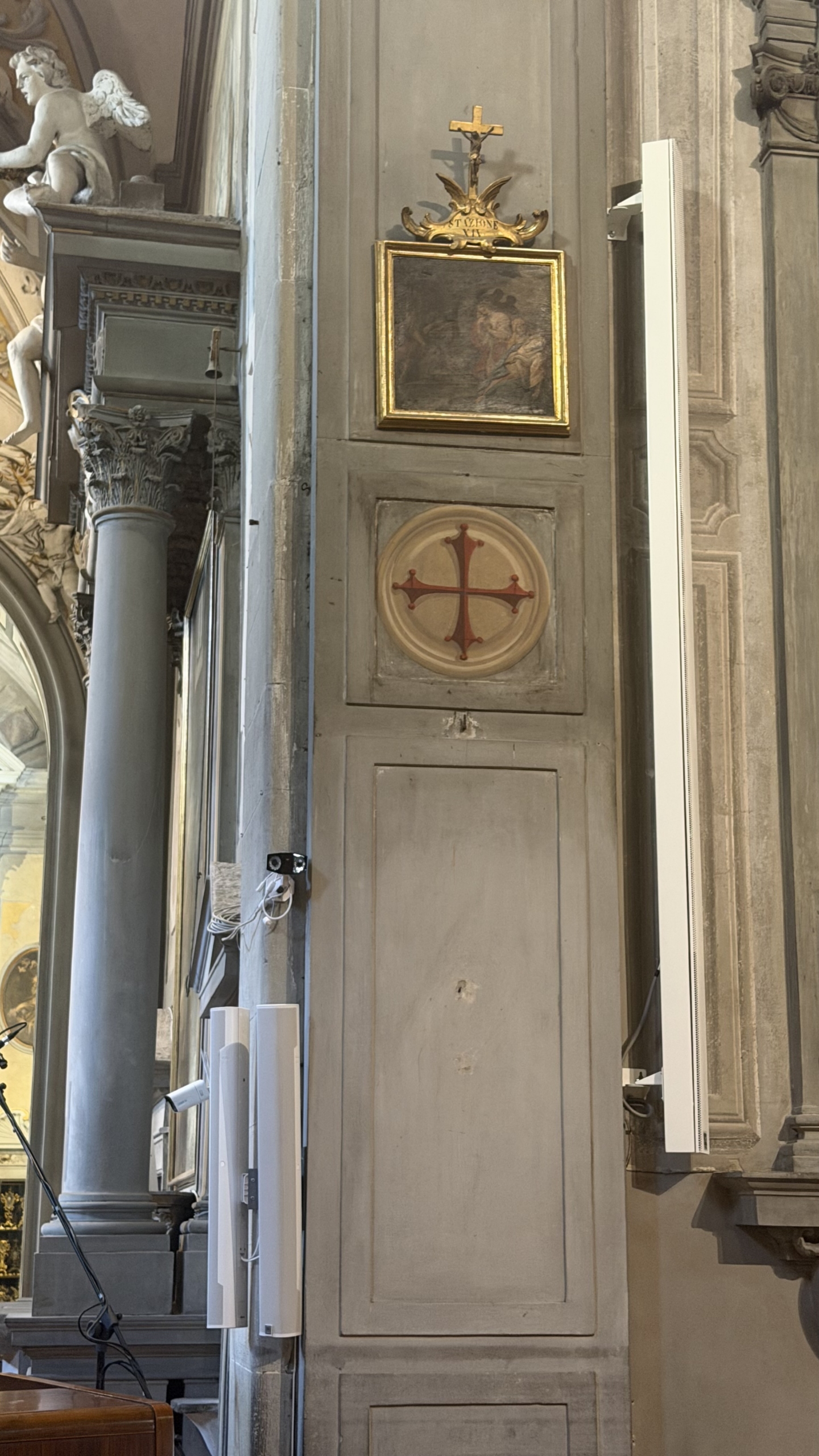
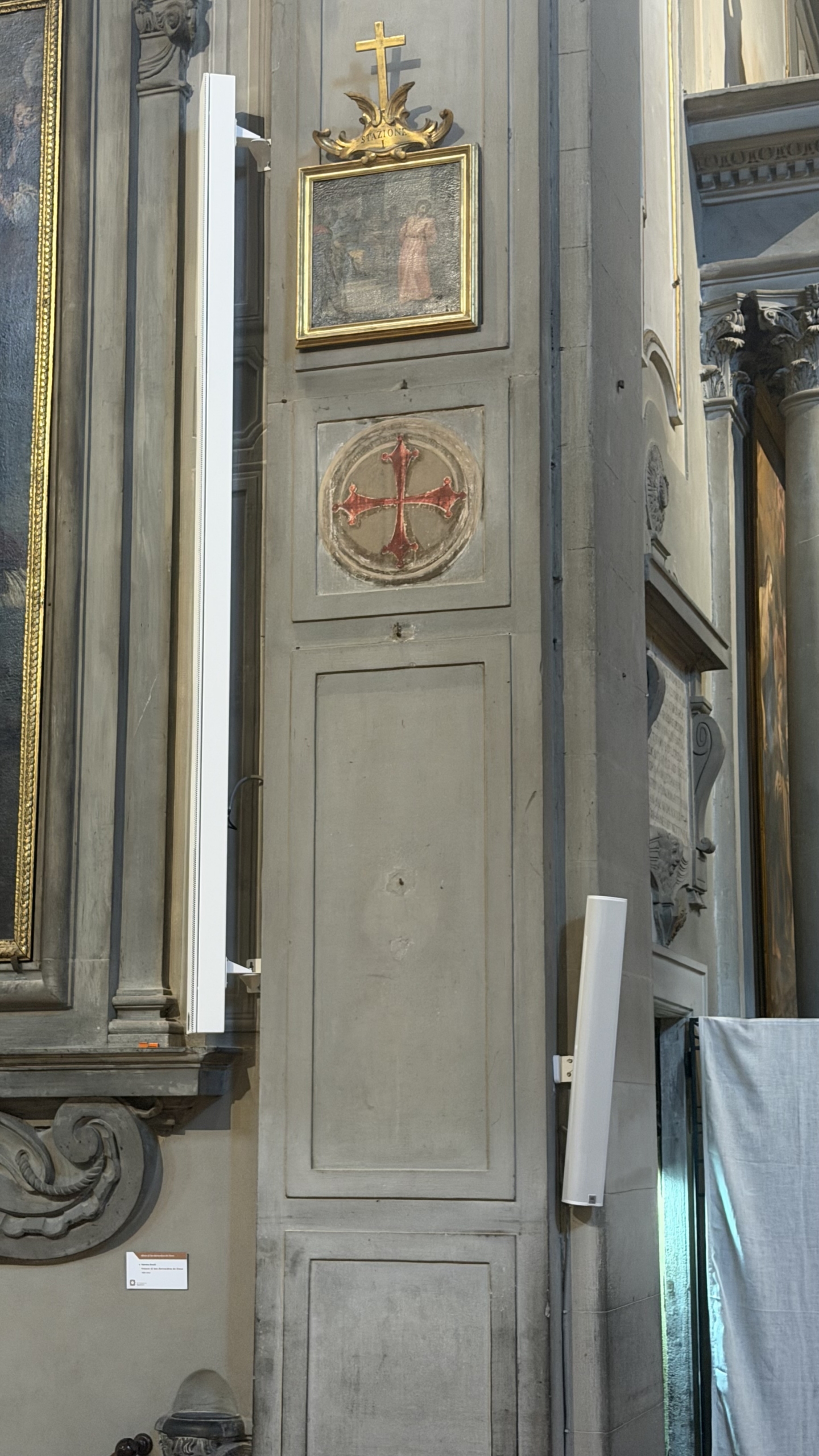
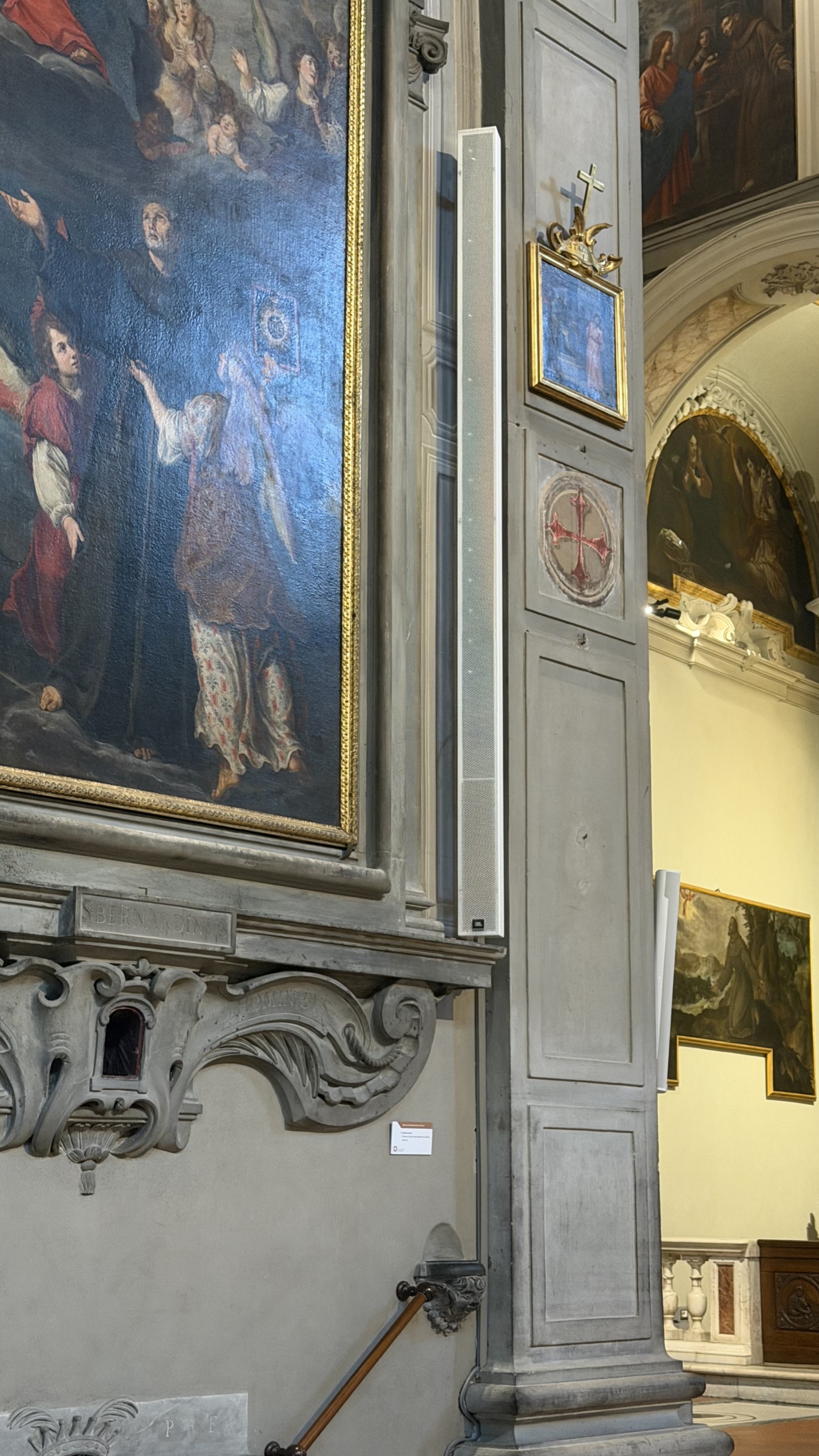
After installation, the team tuned the system on site to refine the beam steering for the church’s acoustic conditions. The result is a sound system designed to be noticed through improved clarity rather than through visual presence. Visitors can stay focused on the liturgy, artwork and architecture, while the congregation receives more consistent speech coverage through the central nave.
A Model for Sensitive Historic Spaces
The Ognissanti project is smaller in equipment count than many featured installations, but that restraint is what makes it useful. It shows how careful acoustic planning can solve a practical communication problem without overwhelming a historically significant room.
For integrators and designers working in churches, cultural venues and heritage buildings, the lesson is not simply that beam steering can reduce loudspeaker count. It is that the system design has to begin with the building’s limits. At Ognissanti, the audio solution works because it treats the architecture as the primary experience and the technology as a supporting layer.
Equipment Highlights
- Two JBL Professional Intellivox beam-steering column loudspeakers
- JBL Professional COL800 column loudspeakers behind the altar
- JBL Digital Directivity Synthesis beam-steering technology
- Acoustic measurements, 3D modeling and beam-steering simulations by Exhibo
- On-site tuning after installation
Project Partners
Integrator: Exhibo
Audio equipment: JBL Professional
